

29 April 2025, 18:13
-
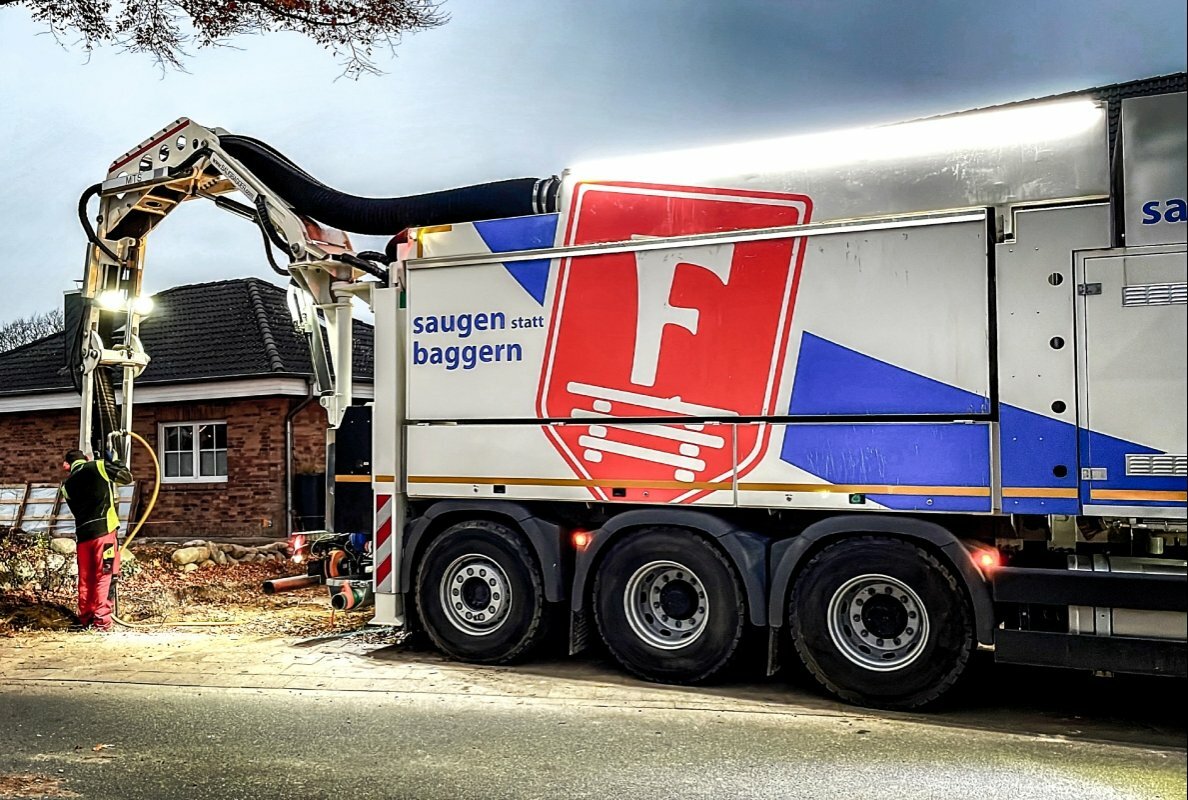
Flenker Bau GmbH utilizes the Dino12 vacuum excavator from MTS Mobile Tiefbau Saugsysteme GmbH to efficiently remove construction debris in downtown Kiel.
-
The Dino12 vacuum excavator significantly reduces labor and time, completing tasks with fewer workers and in less time compared to traditional manual methods.
-
The vacuum excavator's robust filter system minimizes dust, enhancing air quality and safety during construction projects.
-
The Dino12 is versatile, used not only in building construction but also in earthworks, protecting infrastructure lines and tree roots during excavation.
-
Flenker Bau's specialization in vacuum excavation has led to an increase in contracts and positions the company as a comprehensive provider in both building and civil construction.
-
The company is considering adding a second Dino12 to its fleet due to the growing demand for vacuum excavation technology in the region.
Vacuum Excavator Optimizes Building Construction
Advertisement
A construction project in downtown Kiel is underway: a mezzanine floor is being removed on the fifth floor of a residential building. The debris, which workers from Flenker Bau GmbH used to laboriously clear away with shovels and buckets, is now effortlessly disposed of thanks to their Dino12 vacuum excavator from MTS Mobile Tiefbau Saugsysteme GmbH.
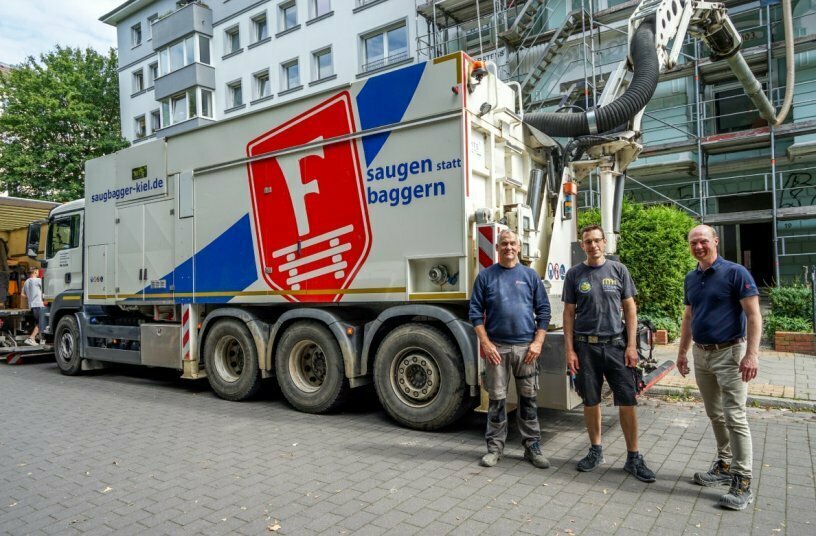
In Goethestraße, opposite Schrevenpark in Kiel, a carpentry company is converting an attic. For removing the mezzanine floor on the fifth floor, they hired Flenker Bau GmbH from Schwentinental. The vacuum excavation specialists at Flenker Bau are increasingly in demand for such jobs, as the Dino12 from MTS offers a highly attractive alternative to the traditional manual process involving shovels and buckets. The mixed debris of clay and bricks from the demolished floor is vacuumed up via the suction hose of the Dino12. This eliminates the need for laborious stair transport or dusty chute disposal. The dust typically created during manual work is no longer an issue thanks to the vacuum excavator´s robust filter system, which captures the dust and keeps the air clean.
Faster with the Dino12
The entire operation runs without the need to block off the street. The vacuum excavator is parked lengthwise in front of the building without disrupting traffic. The suction hose, nearly eight meters long and mounted on a mechanical arm, is extended by an additional thirty meters for this project, reaching the fifth floor. Inside, Flenker Bau workers can simply vacuum up the construction debris thanks to the strong suction power of the Dino12. The debris is collected directly into the machine´s twelve-cubic-meter container. Once full, it is emptied into a waiting container and transported away by truck.
Previously, it took five workers four days to remove a mezzanine floor. With the Dino12, the company now completes the same volume with three workers in just two days. “In times of skilled labor shortages, that´s a valuable advantage,” says Managing Director Patrick Bührsch. Dispatcher Jan Anders-Küßner, who manages the fleet, adds: “Sure, the vacuum excavator costs more per hour than a renovation worker, but the machine gets the job done in much less time, allowing our team to start rebuilding sooner instead of spending time on cleanup.” This represents a significant saving in both time and cost.

Flexibility and Safety Across Many Applications
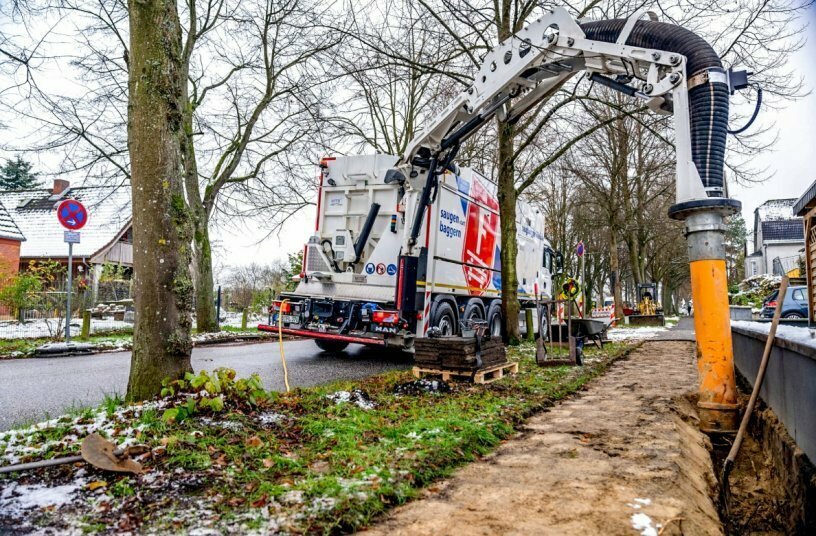
Although the primary use of the Dino12, acquired by Flenker Bau in 2021, is not building construction but rather earthworks - particularly around infrastructure lines - it proves extremely versatile. “Fiber optic lines, water pipes, electrical cables - they´re unfortunately not always located where the plans say they are,” says Anders-Küßner. “With a regular excavator, it´s easy to cause damage that is both expensive and time-consuming.” With the Dino12, only one technician is needed to guide the suction hose via remote control and gently vacuum the material around the lines.
The company is also in demand when it comes to protecting tree roots during inner-city excavation. “We´re getting more and more of these jobs,” confirms Bührsch, as traditional excavators often damage roots to the point that the tree dies. In fact, the decision to purchase the Dino12 was prompted by a historic oak tree that needed protection during a road expansion. Since then, the company’s portfolio has steadily expanded. In 80% of all projects, the vacuum excavator is deployed externally in hard-to-reach and sensitive locations, leading to a substantial increase in contracts for Flenker Bau.
Vacuum Excavators Increasingly Popular in Tenders
With a wide range of services in both building and civil construction, Flenker Bau positions itself as a comprehensive provider for its clients. Thanks to a strong network of partners, the company can handle diverse projects - from earthworks, sewer and drainage jobs, concrete repair, and high-rise construction to root protection. The growing specialization in vacuum excavation makes the company future-proof.
“We’ve had the Dino12 in operation for over three years now and it runs perfectly. Whenever we have a question, MTS support is fast and helpful.” Managing Director Bührsch is very satisfied and does not rule out adding a second vacuum excavator from MTS to the fleet. “There’s a growing number of jobs that specifically require this kind of process and vacuum technology,” he notes. “Hamburg is already ahead, and Kiel will follow.”
Source: wyynot GmbH; MTS Saugbagger
Set LECTURA Press as your preferred source