
14 June 2024, 16:19
Heavy machine operators work in some of the most demanding environments in industry. These workplaces can be hot or cold, noisy, liable to oil or chemical spills, electrical hazards, and of course the intrinsic dangers of working with heavy machinery.
Advertisement
From steel mills to print works, workers in such industries are all too often injured in circumstances where those injuries would have been mitigated by the provision of adequate workwear.
The Bureau of Labor Statistics reported 2.8 million non-fatal workplace injuries in 2022, an increase of 7.5% from the previous year. Clearly, there is room for significant improvement. Providing suitable workwear should contribute to reducing these alarming statistics.
The essential role of specialized workwear for heavy machinery operators
In the demanding field of heavy machinery operation, specialized workwear is not just a convenience but a critical necessity.
Operators face hazards daily, from mechanical risks to environmental extremes. For this reason, it has become vital to innovate within workwear designed specifically for these professionals.
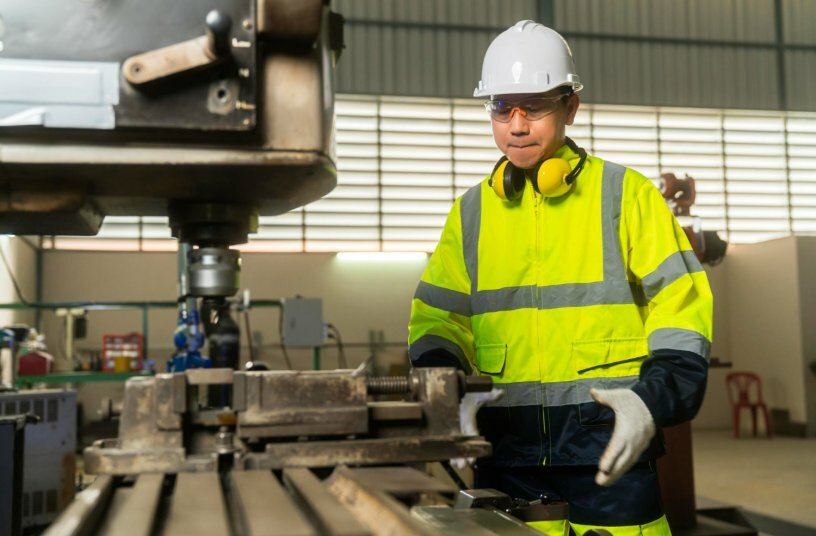
The workwear of today significantly enhances safety, comfort, and efficiency for workers in a host of different industries. Furthermore, every part of the human body is involved in such roles, and therefore every risk must be considered: hats, visors, goggles, ear protectors, overalls, gloves, and boots are all part of the picture.
In addition to these, PPE serves as a crucial barrier against accidents, further underscoring its essential role in maintaining workplace safety. There are also specialist items such as respirators, body-worn sensors, communication aids, and thermal clothing, designed for unique working environments from blast furnaces to factories, building sites to chemical factories.
Professional industrial workwear requires a thorough and professional approach, and one in which safety is paramount. It can literally save lives.
Enhanced safety through advanced materials
One of the most significant advances in workwear for heavy machinery operators is the development of new, durable materials that provide superior protection.
Modern fabrics such as ultra-high-molecular-weight polyethylene (UHMWPE) and advanced aramid fibers (synthetic fibers with extreme tensile strength) are used to create clothing that is resistant to cuts and abrasions, while remaining lightweight and comfortable.
These materials provide superb protection against common occupational hazards such as sharp edges, heavy debris, and extreme temperatures. For instance, UHMWPE is known for its high strength-to-weight ratio, making it an ideal choice for protective gear that does not compromise on comfort.
Furthermore, innovations in fire-resistant fabrics provide additional safety for operators working in high-risk environments involving inflammable substances, or naked flames.
Integration of wearable technology for health monitoring
The inclusion of intelligent sensors within workwear represents a breakthrough in ensuring the well-being of heavy machinery operators.
Smart garments equipped with sensors can monitor vital signs such as heart rate, body temperature, and even hydration levels in real time. This technology allows for immediate response to potential health crises, significantly reducing the risk of serious injuries.
For example, wearable tech can alert operators and supervisors to signs of heat stress or cardiac issues, enabling prompt intervention.
Real-time health monitoring can thus act as a preventive measure, ensuring that operators receive timely medical attention. Such advance warnings are crucial in high-stakes environments where quick interventions can literally save life or limb.
According to an OH&S article, in 2022 such technologies were instrumental in managing over 700,000 nonfatal injuries and 2,000 fatal accidents in sectors like warehousing, manufacturing, and construction.
Communication innovations in workwear
Effective communication is vital for the safety and efficiency of heavy machinery operations.
Recent innovations in workwear include the incorporation of communication technologies such as built-in microphones and speakers, as well as Bluetooth connectivity. These features allow operators to maintain clear and constant communication with their teams, even in noisy or remote job sites.
Body worn cameras, like those commonly used by the police, are beginning to make an impact too, particularly in workplaces where security is paramount. Manufacturers including Getac and Axon are expanding from law enforcement and security provision to the industrial sector.
Enhanced on-site communication through smart workwear not only improves operational efficiency but also enhances safety.
Immediate reporting of hazards, quick coordination during emergencies, and seamless information flow can make a significant difference in preventing accidents.
Advanced personal protective equipment (PPE) for heavy machinery operators
Personal Protective Equipment (PPE) has seen remarkable innovations, particularly in the form of smart helmets and augmented reality (AR) visors.
These advanced PPE items offer enhanced safety features and situational awareness. For instance, smart helmets can be equipped with sensors that detect impacts, provide real-time data to the wearer, and alert emergency contacts in case of an accident.
AR visors offer another layer of safety by overlaying crucial information onto the operator’s field of vision. This can include navigation assistance, hazard alerts, and real-time operational data, which help in making informed decisions quickly and efficiently.
Univetar’s VisionAR augmented safety glasses recently received safety certification for industrial use, for example. The company is inviting developers to create new use cases for their industrial AR platform.
Such innovations protect operators while allowing them to perform complex and difficult tasks accurately and safely.
Ergonomic features and comfort
Ergonomics plays a crucial role in the design of modern workwear for heavy machinery operators. After all, if such workwear is uncomfortable or restrictive, workers may resist wearing it, which could increase the potential for workplace accidents.
Recent designs focus on improving comfort and reducing fatigue, essential interventions for maintaining productivity and ensuring long-term health. Features such as adjustable fits, padded supports, and breathable fabrics contribute to overall comfort.
Innovations in ergonomic design help distribute weight more evenly, reduce strain on joints and muscles, and provide better mobility. This is particularly important for operators who spend long hours in physically demanding roles.
By enhancing comfort, ergonomic workwear helps reduce the risk of musculoskeletal disorders and allows operators to focus more effectively on their tasks.
PPE enhances operational efficiency; more importantly, it saves lives
The advances in workwear for heavy machinery operators underscore the importance of safety, comfort, and efficiency in demanding work environments.
From durable materials and wearable technology to enhanced communication and ergonomic designs, technical innovations are setting new standards for protective clothing.
Source: All Seasons Uniforms
Set LECTURA Press as your preferred source