
19 November 2026, 15:25
-
Bobcat aims to double revenue in five years through organic growth, acquisitions, and new subscription and software services.
-
The material handling market is shifting strongly towards leasing and rental, with 90% of new equipment acquired this way, while used equipment demand remains high but supply is limited.
-
Customer priorities now emphasize operational efficiency, safety, ergonomics, sustainability, and tailored solutions over just product durability and price.
-
Lithium-ion batteries have become mainstream with precise application sizing improving uptime; hydrogen fuel cells face infrastructure challenges.
-
Bobcat's new BNT electric forklift offers versatility and lithium-ion compatibility with extended warranties, addressing diverse operational needs.
-
Choosing undersized equipment leads to higher long-term costs due to safety risks and reduced productivity.
-
Traditional sales approaches focusing on product specs and price are less effective; customers prefer comprehensive, customized solutions including fleet management and telematics.
How do you envision Bobcat’s strategy over the next five years?
Advertisement
I can quote our CEO, Scott Park, who recently said that Bobcat has the potential to double its revenue again over the next five years. According to Scott, this growth will come from several sources: organic growth, growth through strategic acquisitions and integration, as well as new business opportunities, including subscription-based services and software solutions.
Is the purchase of new equipment maintaining its position against equipment rental and the second-hand market?
Over the past few years, the market has experienced a significant shift away from traditional equipment ownership and towards long-term rental and leasing solutions. Today, the vast majority of new forklift acquisitions are completed through leasing agreements that include full-service maintenance packages, repairs and comprehensive coverage. Direct purchase of new equipment has become increasingly uncommon, with many companies prioritizing predictable operating costs, reduced administrative burden and maximum fleet uptime. In fact, it is estimated that around 90% of new equipment transactions are now structured through lease or rental contracts rather than outright purchases.
The situation in the used equipment market is quite different. Demand for second-hand forklifts remains very strong, driven by businesses looking for cost-effective alternatives. However, the availability of quality used units has decreased considerably in recent years, creating a supply-demand imbalance. As a result, purchase prices for used equipment have increased, while buyers are often faced with limited options and intense competition. This combination of higher prices and restricted availability is encouraging many decision-makers to reconsider ownership altogether and transition towards long-term rental fleets, where flexibility, service support and cost predictability offer significant advantages.
What changes are you seeing in your customers’ decision-making criteria?
Customer priorities have evolved significantly in recent years. Traditionally, purchasing decisions were mainly driven by the durability of the equipment, product quality,robust heavy-duty designs and the availability of strong aftersales support. While these factors remain important, today’s customers are placing much greater emphasis on operational efficiency, cost optimization, ergonomics, safety and sustainability.
Modern forklift selection is now based on detailed application analysis rather than simply choosing the most robust machine. Customers carefully evaluate load profiles, operating hours, energy consumption, warehouse layouts and productivity targets to ensure they are selecting the right equipment for the specific task. The objective is to achieve the lowest total cost of ownership while maximizing performance and reducing energy consumption.
At the same time, we see several distinct customer profiles in the material handling industry. Some customers remain highly price-driven and focus primarily on the initial investment.
Others are product-oriented and prioritize quality, reliability and long-term performance. A growing segment prefers to work with a trusted partner capable of providing a complete material handling solution, including equipment, service, fleet management and operational consulting. Finally, larger organizations are increasingly focused on fleet visibility and control, demanding advanced safety features, telematics, KPI monitoring and detailed utilization data to improve productivity, compliance and overall fleet efficiency.
Lithium batteries, hydrogen and other alternative power sources are becoming more widespread. What limitations do these technologies still present in demanding applications that require high power, long operating times and maximum uptime?
Five years ago, lithium-ion batteries were still considered an emerging technology in the material handling industry. Today, they have become a mainstream solution, with a significantly smaller gap in acquisition cost compared to traditional lead-acid batteries. The market has also evolved rapidly, with a broad range of original equipment and aftermarket retrofit solutions now available. At Bobcat, we have recently expanded our lithium-ion offering through a fully integrated product range and the introduction of new models specifically designed to maximize the benefits of lithium technology.
The key to success with lithium-ion applications is proper sizing and application analysis. Unlike conventional battery technologies, lithium solutions can be tailored very precisely to the customer’s operational requirements. When correctly specified, they can substantially improve fleet utilization, reduce charging downtime, increase equipment availability, and in many cases even reduce the total number of forklifts required to perform the same operation.
Hydrogen fuel cell technology represents a different scenario. The forklift technology itself is already mature and available, and we have solutions ready for deployment. However, the main challenge is not the truck—it is the hydrogen ecosystem. The infrastructure required for hydrogen production, storage, transportation and refuelling remains costly and, in many cases, difficult to justify from an economic perspective. For most companies, the investment is concentrated in the fuel supply infrastructure rather than in the vehicles themselves.
What are the latest models you have introduced, and what operational challenges were they designed to solve?
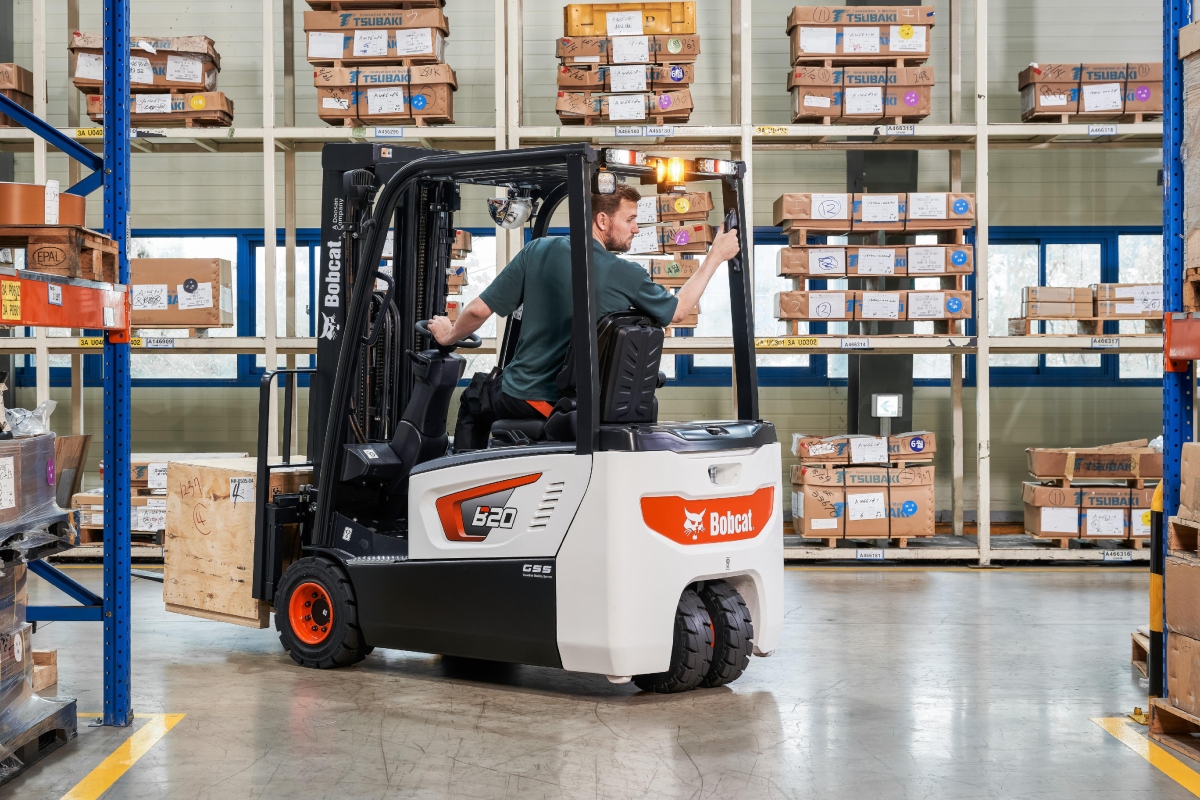
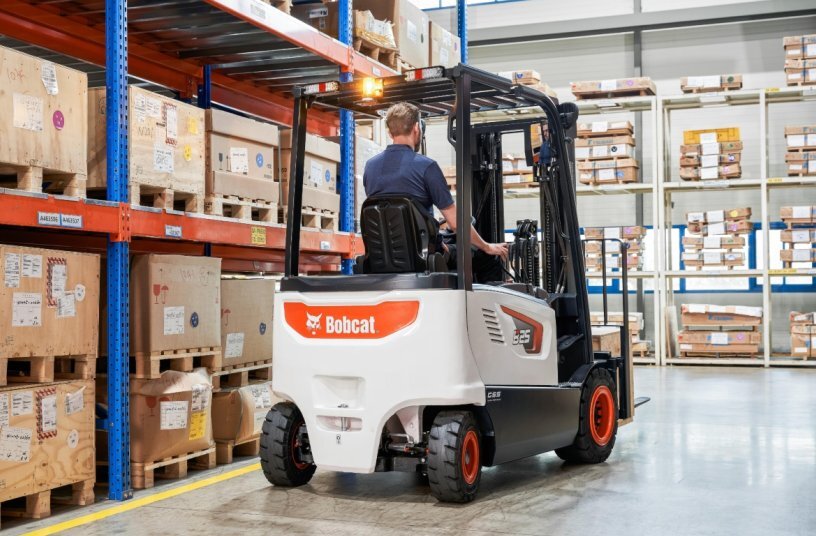
Over the past few years, we have introduced several important additions to our product portfolio, but one of the most significant launches has been the new Bobcat BNT three-wheel electric counterbalanced forklift. This model represents a major step forward in combining productivity, reliability and affordability, particularly for customers looking to accelerate their transition towards lithium-ion technology.
The BNT was specifically developed to deliver the ideal balance between performance and investment cost. We have been extremely encouraged by the market reception since its launch, with very positive feedback from customers across multiple industries. Designed to compete in one of the market’s most popular segments, the BNT offers a robust, high-quality solution backed by an extended warranty package of up to 5 years or 6000 operating hours, providing customers with additional confidence and peace of mind.
One of the key challenges the BNT addresses is the growing demand for versatile equipment capable of operating efficiently in a wide variety of applications. Whether in low- to medium-intensity operations or demanding multi-shift environments, the truck can be configured to meet specific customer requirements through a broad range of options and specifications.
A major advantage of the BNT is its lithium-ion-focused design. Unlike many forklifts in this category, it can be equipped with high-capacity lithium-ion batteries, enabling fast charging, reduced downtime and improved fleet availability. By working closely with our sales and technical specialists, customers can select the most suitable battery configuration to maximize productivity, energy efficiency and operational performance.
In the long term, which decision tends to be more costly for customers: purchasing oversized equipment or choosing a machine that falls short of operational requirements?
The answer is quite clear: choosing a machine that falls short of operational requirements is almost always the more costly decision in the long term. If a forklift is unable to safely and efficiently perform the intended task, it immediately becomes an underperforming asset and, in many cases, a wasted investment. An oversized machine may not be the most cost-efficient solution, but it will still complete the job and maintain productivity on a daily basis.
The greatest risk associated with undersized equipment is not only reduced productivity but also compromised safety. When a forklift is pushed beyond its intended operating limits, the risk of accidents, equipment damage, unplanned downtime and excessive wear increases significantly. These factors can quickly outweigh any initial savings achieved by selecting a smaller machine. For this reason, every equipment selection process should begin with a thorough analysis of safety requirements, operational restrictions and the minimum performance criteria needed to guarantee the application. Once these parameters have been clearly defined, we can focus on optimizing the solution, balancing productivity, energy consumption, acquisition costs and total cost of ownership (TCO).
Which sales strategies that worked ten years ago are becoming less effective in a market where customers have more options, such as equipment rental and used machinery?
The material handling market has changed significantly over the past decade, and with it, the effectiveness of traditional sales approaches. Ten years ago, many purchasing decisions were driven primarily by product specifications, brand reputation and the initial acquisition price. A strong machine, a competitive offer and a good relationship with the customer were often enough to secure a sale.
Today, that approach is no longer sufficient. Customers have access to a much wider range of alternatives, including long-term rental contracts, full-service leasing, fleet management solutions and a highly competitive used equipment market. As a result, focusing exclusively on the product itself has become far less effective.
Modern customers are looking for solutions rather than simply purchasing a forklift. They expect suppliers to understand their operations, analyse their applications and provide recommendations that improve productivity, safety and overall cost efficiency. Discussions increasingly revolve around Total Cost of Ownership (TCO), fleet utilization, energy consumption, uptime, operator comfort and long-term operational performance rather than just purchase price.
Another strategy that has lost effectiveness is the “one-size-fits-all” approach. Every operation is different, and customers increasingly expect tailored solutions adapted to their specific requirements. The ability to provide application studies, fleet optimization proposals, telematics data, safety improvements and flexible financing options has become a key differentiator.

Source: Bobcat
Set LECTURA Press as your preferred source

