

12 September 2025, 09:54
-
Volvo CE and Volvo Trucks powered the world’s first zero-emission deconstruction project at Siemens Technology Campus in Erlangen, Germany.
-
The electric fleet included five Volvo machines, such as the ECR18 Electric compact excavator and the L20 Electric wheel loader, handling various demolition tasks.
-
The project achieved a 96% recycling rate of construction waste, supporting circular materials management and reducing transport-related emissions.
-
Power for the site was provided by a custom on-site transformer, ensuring continuous energy supply and fast charging for multiple machines.
-
The collaboration between Volvo CE, Metzner Recycling, Siemens Real Estate, and other partners demonstrated the potential of electric construction machines and set a precedent for sustainable urban construction.
A fleet of all-electric construction machines from Volvo Construction Equipment (Volvo CE) and Volvo Trucks has been powering operations at the world’s first zero-emission deconstruction project at Siemens Technology Campus in Erlangen, Germany – setting a powerful new precedent for the future of sustainable construction.
Advertisement
In a bold demonstration of sustainable power, Volvo CE deployed five electric machines - including compact, mid-size and grid-connected models - to deliver high-performance demolition for Siemens’ €500 million Technology Campus development. The machines handled everything from selective gutting to concrete crushing and materials transport, supported throughout by electric trucks from Volvo Trucks.
The project marks the first full-scale electric deconstruction of its kind, proving that emission-free deconstruction is achievable today with the right technology, partners, and ambition.
“Our transformation is no longer a vision, but a reality,” said Therese Schmitz-Hillebrecht, Head of Market Area Central Europe at Volvo CE. “We don’t just develop electric construction machines – we accompany our partners on the path to an emission-free future. The fact that companies like Metzner and Siemens are joining us on this path is a strong sign.”
The electric fleet included:
-
Volvo ECR18 Electric compact excavator with hydraulic breaker, operating inside the buildings performing precise break-up and demolition of concrete and masonry
-
Volvo L20 Electric wheel loader transporting the extracted materials from inside the buildings for processing
-
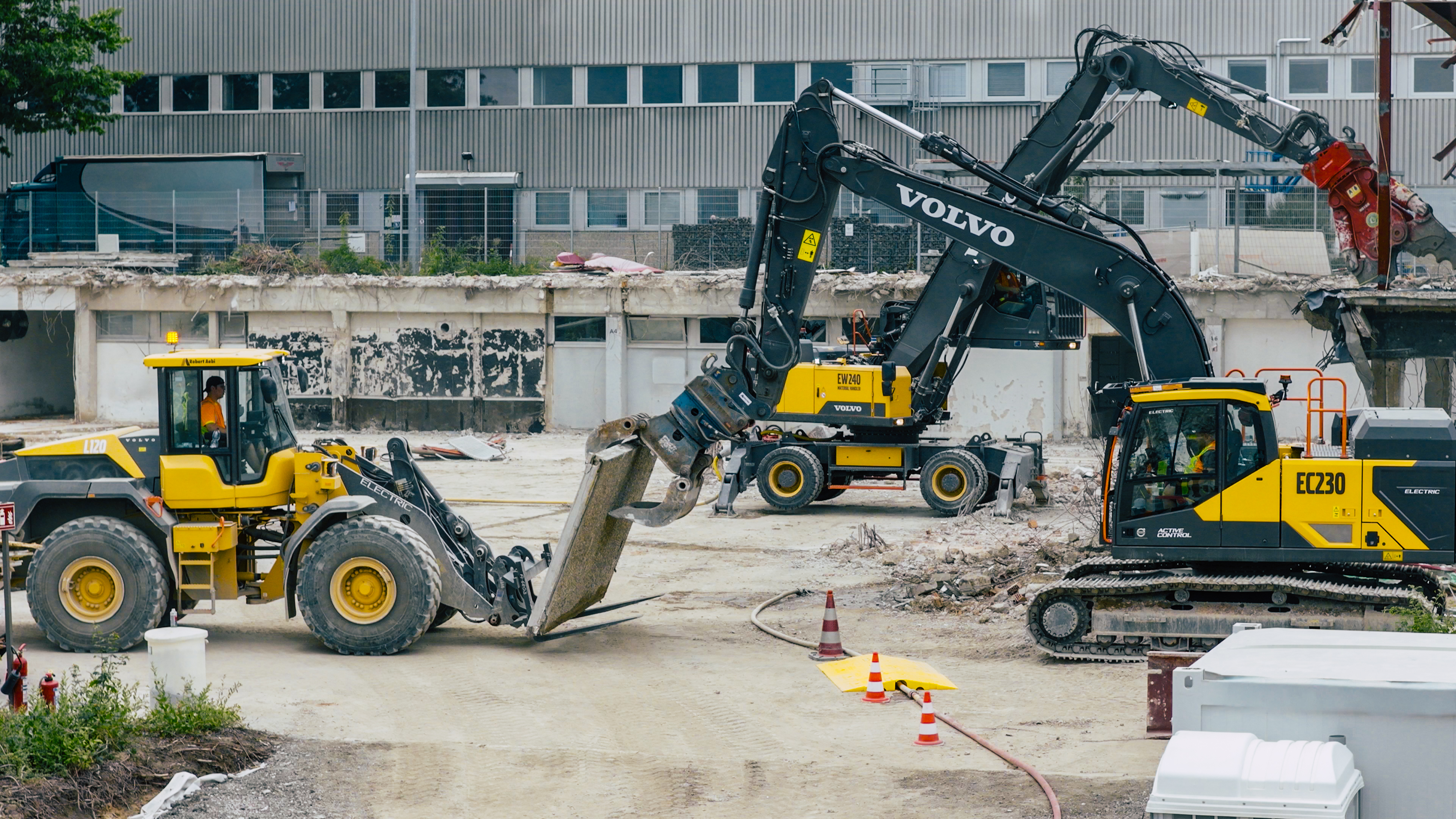
Volvo EW240 MH Electric grid-connected material handler for exterior deconstruction and handling
-
Volvo EC230 Electric crawler excavator for deconstruction, concrete cutting and crusher feeding
-
Volvo L120 Electric wheel loader for transporting materials to and from the electric crusher
Together with demolition specialists, Metzner Recycling, the machines deconstructed three buildings across nearly 25,000 cubic meters. Indoors, the compact excavator and wheel loader operated safely and quietly – supported by a Husqvarna DXR145/DXR305 demolition robot – eliminating emissions and the need for air filtration systems and speeding up demolition tasks. Externally, powerful electric machines dismantled, crushed and loaded materials directly into a Kleemann electric crusher and screening plant, with a Volvo FM Electric hook lift and a Volvo FH Electric semi tractor from Volvo Trucks transporting materials off-site.
The fleet sorted and processed approximately 12,800 tons of construction waste. An impressive 96% was recycled into raw materials for future use – supporting the shift towards circular materials management and cutting down transport-related costs and emissions.

Power for the job site was provided by a custom on-site transformer, which provided a direct connection to the grid and access to certified renewable electricity. This allowed multiple machines to be fast charged simultaneously, while ensuring a continuous energy supply for the grid-connected equipment.
Operating on an active campus – with nearby offices still in use – the low-noise performance of the electric machines proved a major advantage, minimizing disruption while maintaining productivity.
Pioneering zero-emission deconstruction with Volvo CE’s electric machines
The new state-of-the-art, 200,000 square-meter Siemens Technology Campus is designed to be zero-emission, adhering to the highest sustainability standards. However, an emission-free deconstruction was not part of the original scope. Instead, it came about through close collaboration between Volvo CE and Metzner and was enthusiastically received by Siemens.
Christian Franz, Head of Sustainability at Siemens Real Estate, said: “At Siemens Real Estate, we are committed to pushing the boundaries of sustainable construction and demolition. This groundbreaking electric deconstruction project boasts an impressive 96% recycling rate and is a testament to our commitment to achieving excellence in sustainability. Through strong collaboration and innovative thinking, the team has achieved exceptional results that directly support our company’s ambitious sustainability targets. This project illustrates how partnerships and determination can create a lasting impact and help shape a more sustainable real estate industry.”
Any initial operator concerns faded quickly once they experienced the electric machines for themselves. Feedback highlighted their impressive power, responsive handling and quiet, emission-free performance. The plug in charging process – which replaces conventional on-site refueling – also proved convenient and efficient.

Michael Metzner, Owner of Metzner Recycling, said: “The fact that we have now taken the first major step towards an all-electric, low emission dismantling site as a technical standard is a huge success for us – the Metzner team – and our clients. I get goosebumps when I think about what these machines make possible. Electric equipment could unlock urban projects currently held back by noise and pollution concerns. In fact, we’ve already introduced electric wheel loaders at some of our other sites.”
Delivering a blueprint for the future of urban construction
The project not only showcases the potential of electric machines but also serves as a valuable live testbed for future large-scale applications, enabling operators, planners and logistics teams to gain hands-on experience with electric machines, workflows and new safety protocols.
Peter Bauer, Segment Leader at Volvo CE, said: “This milestone shows what’s possible when like-minded partners with shared ambitions collaborate. Without the close cooperation of all those involved, this project would not have been possible. Metzner has shown the courage to break new ground – and Volvo, together with its partners, has been able to demonstrate the potential that already exists in electric construction today.”
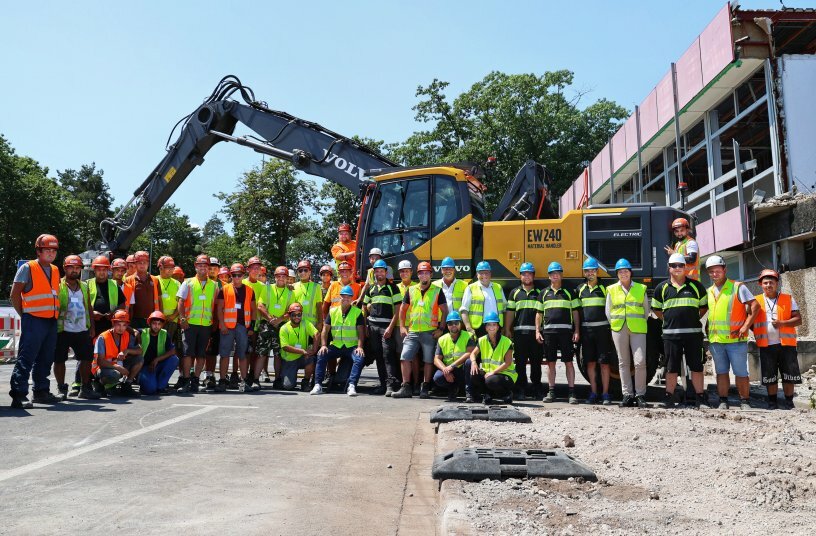
The success of the project was also made possible through the openness and support of Siemens Real Estate. Key deliver partner, Robert Aebi, Volvo’ CE’s dealer in the region, provided machine customization, servicing, technical support, operator training and machine handovers and rentals. Other partners who played a vital role in realizing the world’s first zero-emission deconstruction site included Volvo Trucks, Husqvarna Construction, Spie and Erlanger Stadtwerke.
Source: Volvo Construction Equipment
Set LECTURA Press as your preferred source

