

19 September 2024, 15:16
-
Wacker Neuson now offers HVO fuel for all diesel-driven machines, reducing CO2 emissions by 90% compared to diesel.
-
HVO fuel, made from renewable raw materials, is approved for use in all Wacker Neuson Stage 5 diesel engines produced from September.
-
The company emphasizes environmental responsibility, providing customers with a sustainable fuel option without requiring engine modifications.
-
Wacker Neuson has been pioneering zero emission products for over ten years, with plans to double its range of zero emission machines by 2025.
-
The company aims to offer battery-powered alternatives for all hand-held construction equipment by 2030, supporting a comprehensive zero emission ecosystem.
-
HVO fuels expand the options for environmentally-friendly working
-
Most Wacker Neuson compact machines are initially filled ex works with HVO fuel
-
HVO fuel improves the carbon footprint of conventional construction equipment and machines
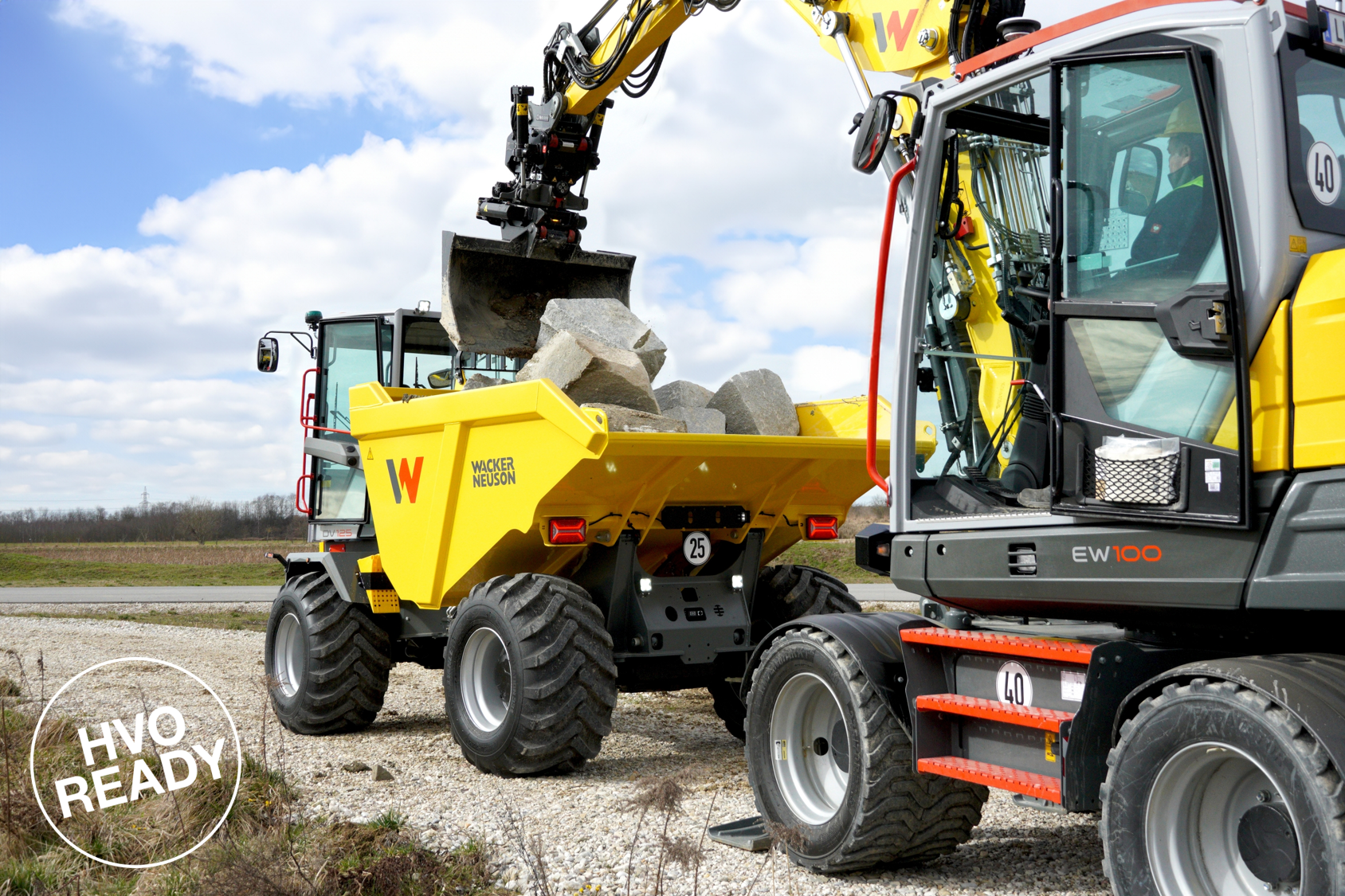
Since this year, Wacker Neuson has been offering customers the option to fill up all diesel-driven machines with the alternative HVO fuel. With fuels made from hydrotreated vegetable oils (HVO), combustion engines can be operated with an almost neutral carbon footprint. The fuel is manufactured from renewable raw materials and burns with less emissions. It therefore has a better carbon footprint than fossil fuels. With HVO it is possible to reduce CO2 emissions by 90 percent compared to diesel operation. All Wacker Neuson construction equipment and compact machines with a Stage 5 diesel engine produced from September this year are approved for use with HVO fuels following EN15940. This includes excavators, wheel dumpers, wheel loaders and telehandlers, as well as vibratory plates, rammers, and rollers.
“We take our responsibility to provide an environmentally-friendly and safe product range very seriously,” says Alexander Greschner, Chief Sales Officer of the Wacker Neuson Group. “With the option to use HVO instead of fossil fuels, our customers can improve their carbon footprint without great effort and they can work in a more future-oriented manner. With this, we are offering our customers more flexibility, and as a manufacturer we are contributing to more sustainable construction sites.” Almost all Wacker Neuson compact machines* will be initially fueled ex works with HVO from September this year. As a result, Wacker Neuson is taking a consistent step towards a more sustainable future and is also encouraging customers to take this path.
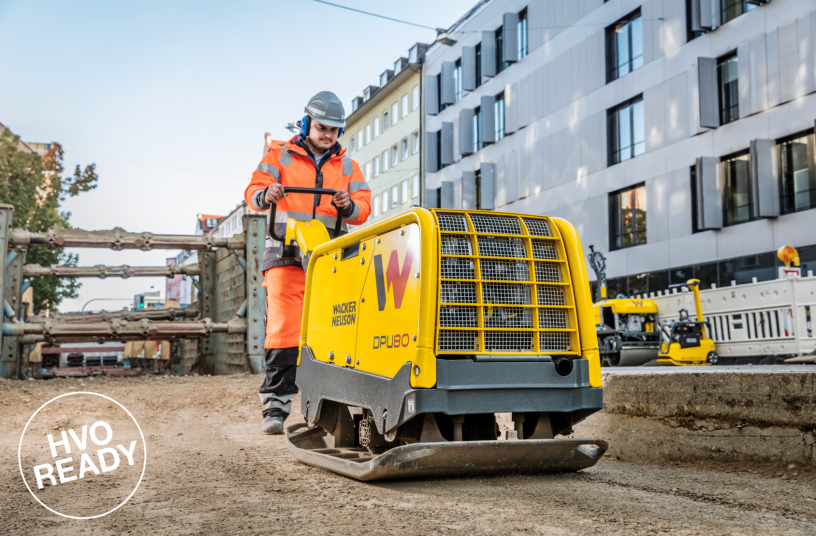
The same drive with a more environmentally-friendly fuel: HVO
As there are no significant differences in the chemical properties between the fuels HVO and diesel, the engine does not necessitate any adaptations. There are also no additional requirements in terms of storage or use when compared with fossil fuels. While diesel only has a shelf-life of approximately one year, HVO fuels have a shelf-life of several years.
Even during use it is evident that HVO fuel does not harm the engine’s service life, maintenance intervals, or emission behavior. The customer does not have to decide upon one fuel, but can operate the same engine with either pure HVO, an HVO-diesel mixture, or continue to use standard diesel.
Working without emissions: zero emission
Wacker Neuson is taking a trailblazer role with its innovative products and future-oriented solutions. For more than ten years, Wacker Neuson has been working with electrically powered compact machines and construction equipment, always focusing on the best solution for the customer with these zero emission products. With the zero emission series, including excavators, dumpers, wheel loaders and telehandlers, vibratory plates, rammers, and an internal vibrator system for concrete consolidation, it is possible to operate an entire construction site without any direct exhaust emissions. Wacker Neuson plans to double its range of zero emission machines within the performance class up to 40 kW or up to 5 tons by 2025; all hand-held construction equipment will be on offer as battery-powered alternatives by 2030.
Wacker Neuson even goes a step further and focuses on the whole zero emission ecosystem: from the charging infrastructure to specific services such as rental or financing offers as well as government subsidies and a life-cycle analysis of the battery.
Source: Wacker Neuson SE
Set LECTURA Press as your preferred source

