

11 October 2024, 12:39
-
Wirtgen's concrete paving solutions are being used for the Ruta 5 highway expansion in Uruguay.
-
The project involves widening a 75 km section of the highway from one lane to two lanes in each direction.
-
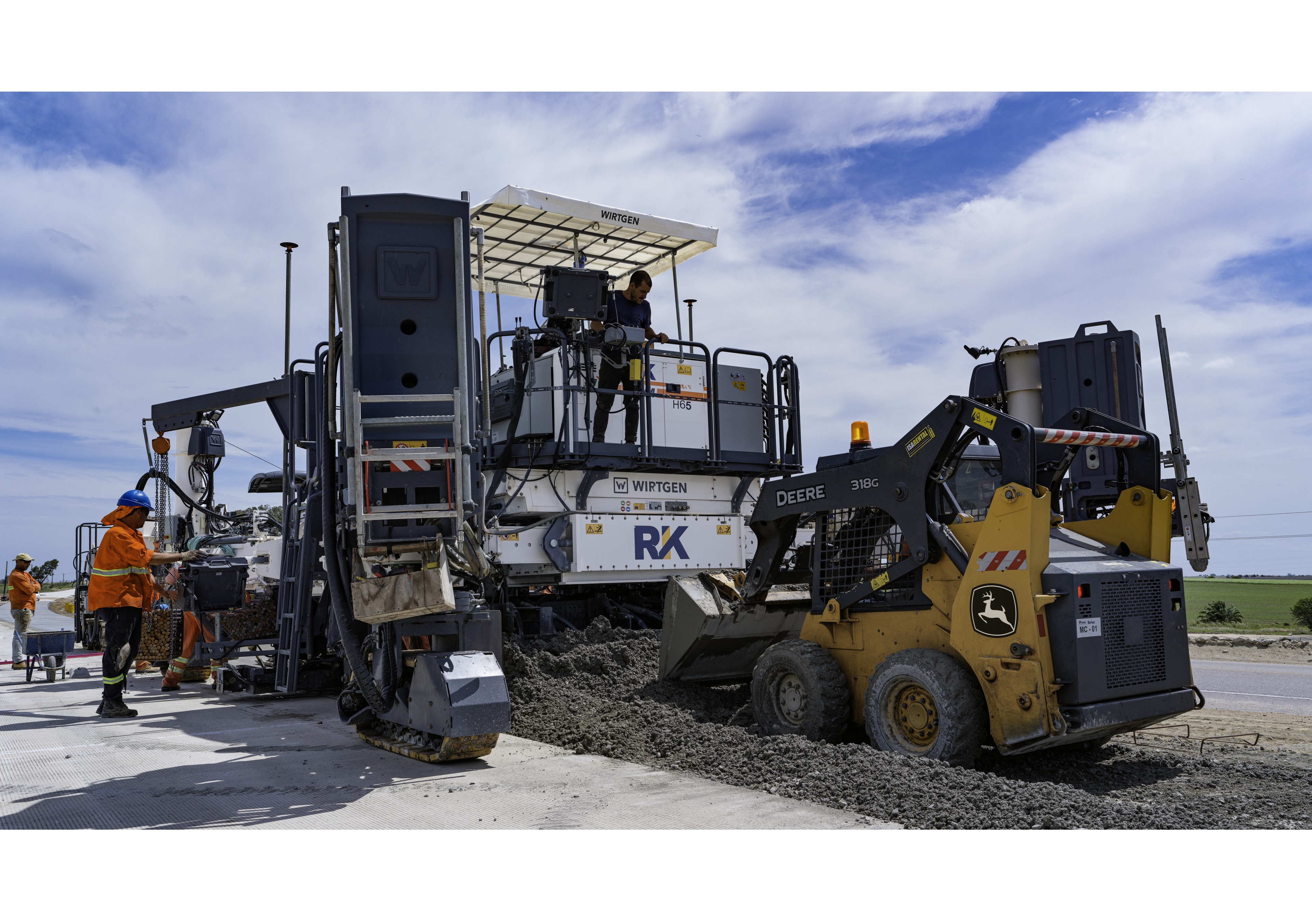
Key equipment includes three Wirtgen SP 64 slipform pavers with DBI, two Wirtgen TCM 180 texture curing machines, and a John Deere JD 318G skid steer loader.
-
The integrated dowel bar inserter (DBI) on the SP 64 enhances process reliability and productivity by automatically placing dowel bars and tie bars.
-
The use of 3D control with virtual stringlines improves site logistics and allows for precise control of the paver’s height and position.
-
The project aims to achieve a high International Roughness Index (IRI) for road surface evenness.
Efficient concrete paving solutions from Wirtgen ensure the success of a road construction project in Uruguay
Advertisement
One of the five most important Uruguayan national highways connecting to the heartland begins in the capital city, Montevideo. The ‘Five Fingers’ link the larger cities to the capital and are the most important arterial routes in the country. One of these is the Ruta 5, which heads north to the city of Rivera on the border with Brazil.
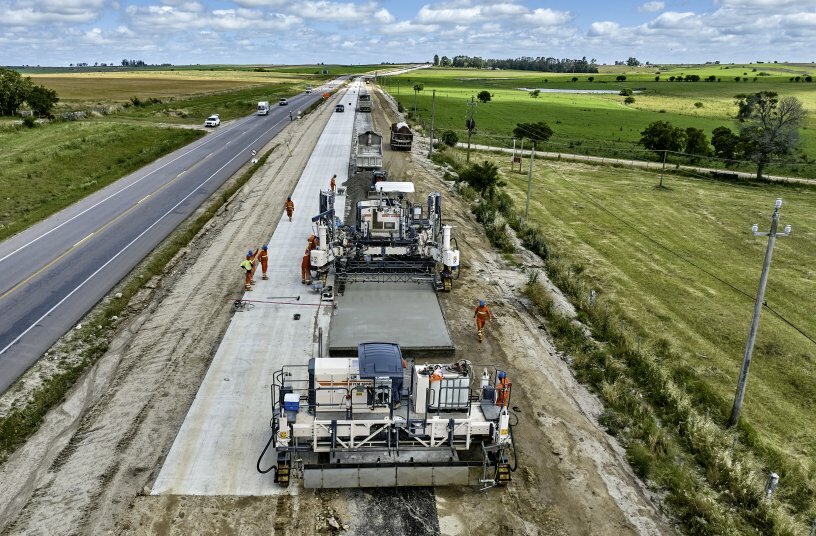
Up to now, there has only been one lane in each direction. but now, the northbound and southbound lanes of a 75 km section of the highway are being doubled to two lanes. The project involves the construction of the new traffic lanes and rehabilitation of the existing road surface. Four contractors were commissioned to carry out the construction project. The equipment deployed for the project included three slipform pavers SP 64 and two texture curing machines TCM 180 from Wirtgen and a JD 318G skid steer loader from John Deere.
Optimised paving process with DBI
When constructing concrete roadways, the reinforcement in the form of dowel baskets or steel rebar mats is frequently pre-placed ahead of the machine. Considering the terrain, this would, however, have been extremely time-consuming. The pre-placement process considerably limits the space available on the construction site and hinders the manoeuvring of construction vehicles on the site. When the reinforcement is in place, this means that the concrete supplied for the paving work can only be delivered from the side.
Here, the use of the integrated dowel bar inserter (DBI) on the SP 64 brings numerous advantages. Both the dowel bars and the longitudinal joint tie bars are placed automatically across the entire paving width. This increases process reliability, as the dowels and tie bars can always be inserted at exactly the right locations. The concrete can be offloaded and evenly spread immediately in front of the machine. Construction vehicles such as the tipper trucks supplying the concrete have more space to manoeuvre. ‘With this machine, we can achieve a much higher overall level of productivity than with our earlier method of paving the concrete with vibrating screeds.’, says Sebastián Trujillo, machine operator from R&K – Berkes, summing up the advantages of the SP 64.
Cutting-Edge Technologies with 3D Control
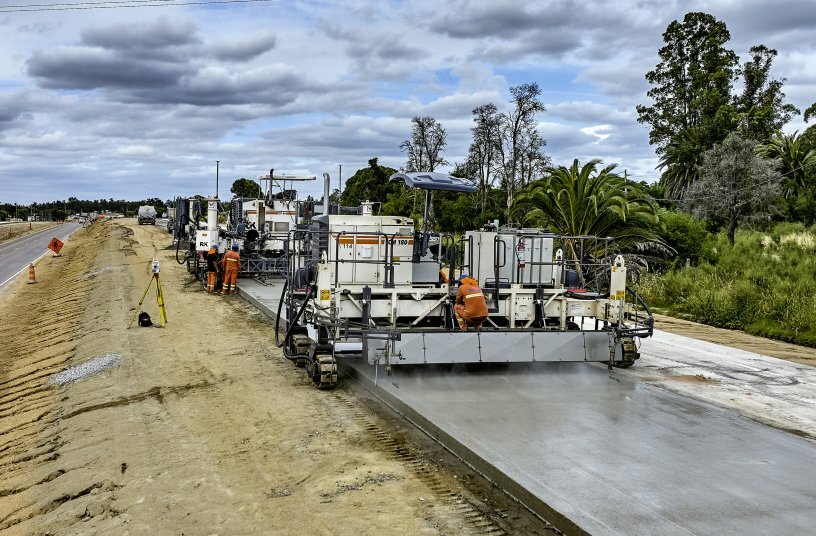
Traditionally, slipform pavers are controlled by mechanical scanning of previously installed stringlines. In contrast to this, when using a virtual stringline for 3D control, the height and positioning data for the line to be paved are contained in a digital terrain model. Two prisms are typically installed on the slipform paver, both of which have line-of-sight contact with a total station and reflect its laser beam. The total station determines the position of the prism in three dimensions and transmits it to the machine’s control system. In combination with the inclination sensors on the machine, this enables extremely precise control of the paver’s height and position.
More room on the construction site
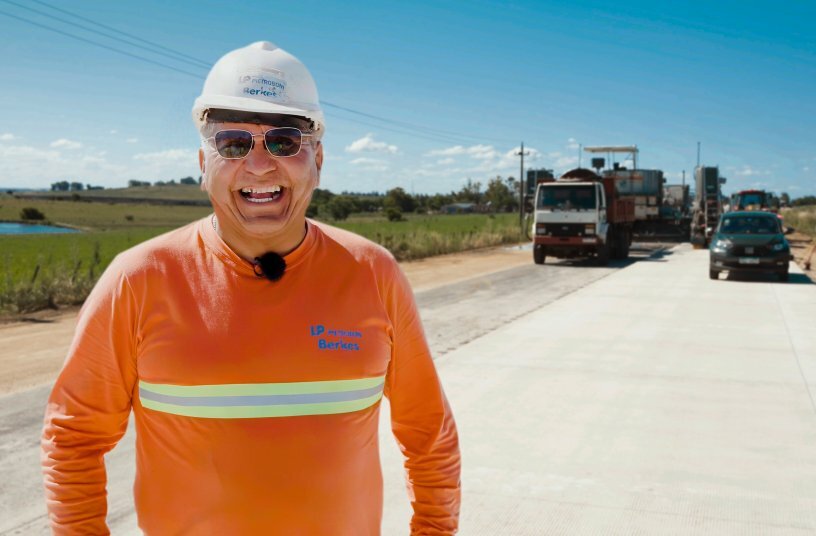
In comparison to control by a physical stringline, a virtual stringline offers a number of benefits: The paving crew on the Ruta 5 highway was able to move freely around the construction site, and there was more room to manoeuvre the machines and construction vehicles. At the same time, the drivers of the tipper trucks delivering the concrete didn’t need to think about a stringline being in the way. They were able to drive right up to the slipform paver to offload the concrete anywhere on the site. The time consuming detours to avoid the stringline when leaving the site were also no longer necessary. Apart from the better site logistics, the project managers also made a special mention of the outstanding IRI they were able to achieve with the system. The International Roughness Index (IRI) describes the evenness of the road surface.
Project details
Widening of the existing road from one lane to two in each direction. Construction of the new lanes and the rehabilitation of the existing road surface.
Machines deployed
Wirtgen:
3x slipform pavers SP 64 with DBI and STBI
2x texture curing machines TCM 180
John Deere:
JD 318G skid steer loader
Construction project
Overall length: 75 km
Section 1: Peaje Mendoza – City of Florida: 30 km
Section 2: City of Florida - Sarandí Grande 45 km
Overall paving width: 15.6 m
Paving width per lane: 3.9 m to 5 m
Paving height: 220 mm
Insertion of steel reinforcement integrated on the machine Dowels and tie bars
Source: WIRTGEN GROUP
Set LECTURA Press as your preferred source


