
8 May 2024, 10:35
-
Wacker Neuson's zero emission range successfully utilized in the renovation of Munich train station, offering solutions for working in confined spaces without direct exhaust emissions or noise.
-
The EZ17e electric mini-excavators and TH412e telehandler played key roles in demolition and material transport, showcasing power equivalent to fuel-powered counterparts while enhancing work environment quality.
-
Battery One powers a range of equipment including the AS62e rammer and APU3050e vibratory plate, demonstrating impressive user-friendliness and endurance for a full workday.
-
Wacker Neuson's commitment to electric compact machines and equipment spans over a decade, focusing on customer-centric solutions and a comprehensive ecosystem approach to zero emission products.
-
The zero emission range wins over ZECH Building SE in application
-
Fully-electric EZ17e tracked excavator moves mountains of material
-
Battery One battery: full power for the electric rammers and vibratory plates
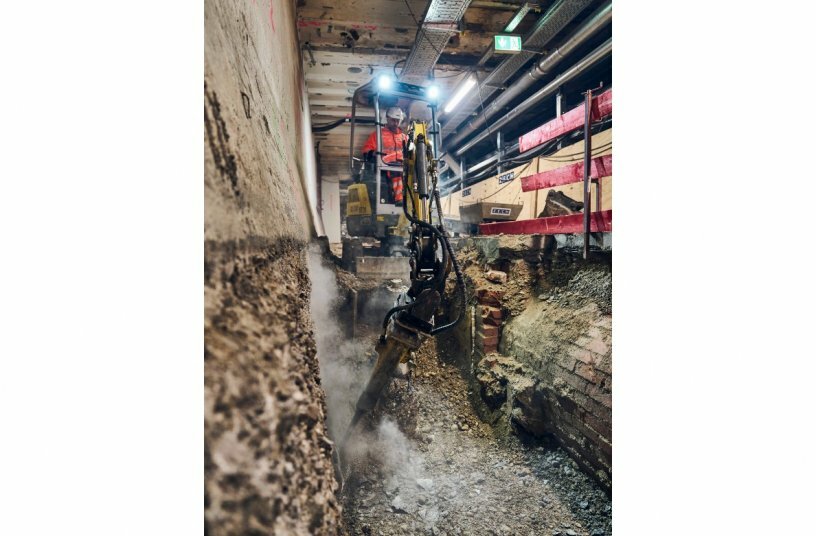
Renovation of the Munich train station is a real, large construction site. Directly below the platforms, the underground foundations have been reinforced with the installation of pile head beams. Challenges for these works were the lack of fresh-air supply in the tunnel, the confined spaces, and the movement of people just a few meters from the construction site. The Wacker Neuson zero emission range stood the test. It was also possible to save both time and money as expensive and complex ventilations systems were not required.
Electrical solutions fulfill all requirements
In the current construction phase, a mounting bridge has been built on the passenger platforms. As support, the executing construction company, ZECH Building SE, constructed a pile head beam in the basement. Christian Eineichner, Deputy Construction Manager ZECH Building SE, explains: “As we are in the basement, we have to work both cleanly and efficiently. In addition to this, we have little space here. The electric devices and machines by Wacker Neuson provide a valuable service here. The construction equipment starts at the push of a button, which makes things so much easier. All work is free of noise and without any direct emissions, which naturally clearly simplifies things for our employees.”
Martin Trumm, zero emission Advisor at Wacker Neuson, confirms: “It really makes sense to have the zero emission range at the Munich train station. With our products we can cover the whole process here, from breaking up the materials through lifting and transporting to compacting. In doing so, the customers do not need to accept output losses at any of the steps, but they benefit from more work safety and efficiency on the grounds of energy-saving applications of the equipment and machines.”
All products have been hired for the duration of the construction phase. Christian Eineichner emphasizes: “We are familiar with Wacker Neuson products from previous construction projects. For that reason, we did not hesitate and requested the Wacker Neuson e-models again for the Munich train station. The whole package simply fits here, starting with the product performance through the user-friendliness to the price.” Martin Trumm adds: “Precisely when entering the emission-free construction site, rental is recommended as the customer can familiarize themselves with the products without a high degree of investment risk.”
Zero emission range covers the whole construction site
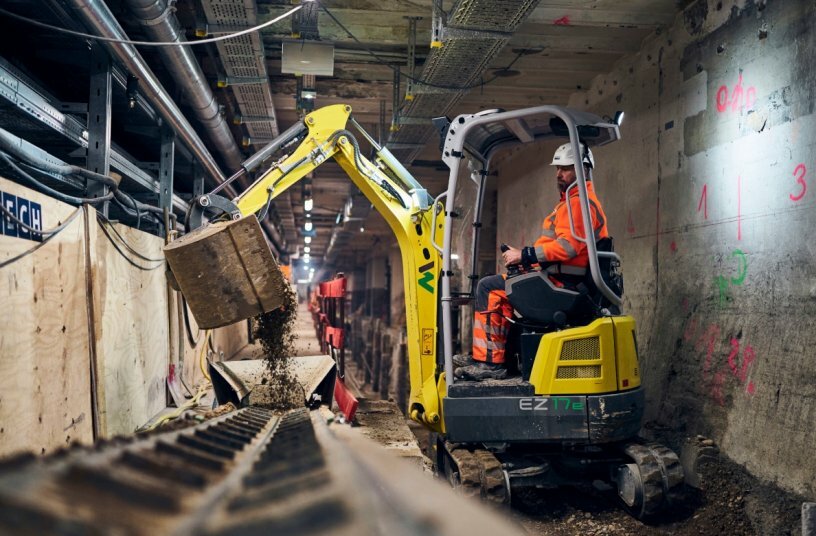
Two battery-powered, electric tracked mini-excavators EZ17e, were continuously used for the demolition applications and the movement of materials. Within the tightest space the machines had to move 600 cubic meters of material. Due to its compact design without a rear overhang, the EZ17e mini-excavator is ideally suited for such work and, in doing so, provides the same power as its fuel-powered counterpart. The work environment for all present workers and operators is therefore more pleasant as both direct exhaust emissions and noises are reduced to a minimum. The battery-powered telehandler TH412e has been used for the transport of materials. Due to its compact design, it is ideally suited to work indoors. The narrow passageways in the underground of the train station did not present a problem for the compact TH412e with dimensions of under two by two meters.
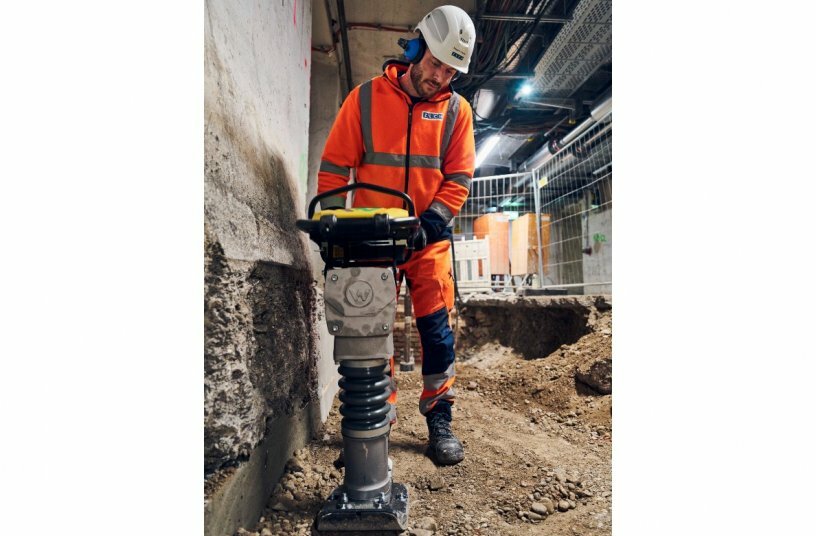
For compaction in trenches the battery-powered AS62e rammer and the reversible vibratory plate APU3050e were used. The user-friendliness and the mileage for a whole working day are impressive on the construction site. Both the battery-powered AS62e and vibratory plate APU3050e, as well as the modular battery-powered internal vibrator ACBe, which were applied parallel to the ground compaction, are powered by the Battery One battery, which can be switched between the products both quickly and easily.

For more than ten years, Wacker Neuson has been engaged with electric compact machines and equipment; in doing so, it always has the best solution for the customer in view. After development of the first battery-powered rammer, other zero emission products followed. Nowadays, Wacker Neuson considers the whole ecosystem: from the loading infrastructure through service provisions, financial offers and different usage models to a life cycle approach of the battery.
Source: Wacker Neuson SE
Set LECTURA Press as your preferred source

