

11 February 2026, 09:47
-
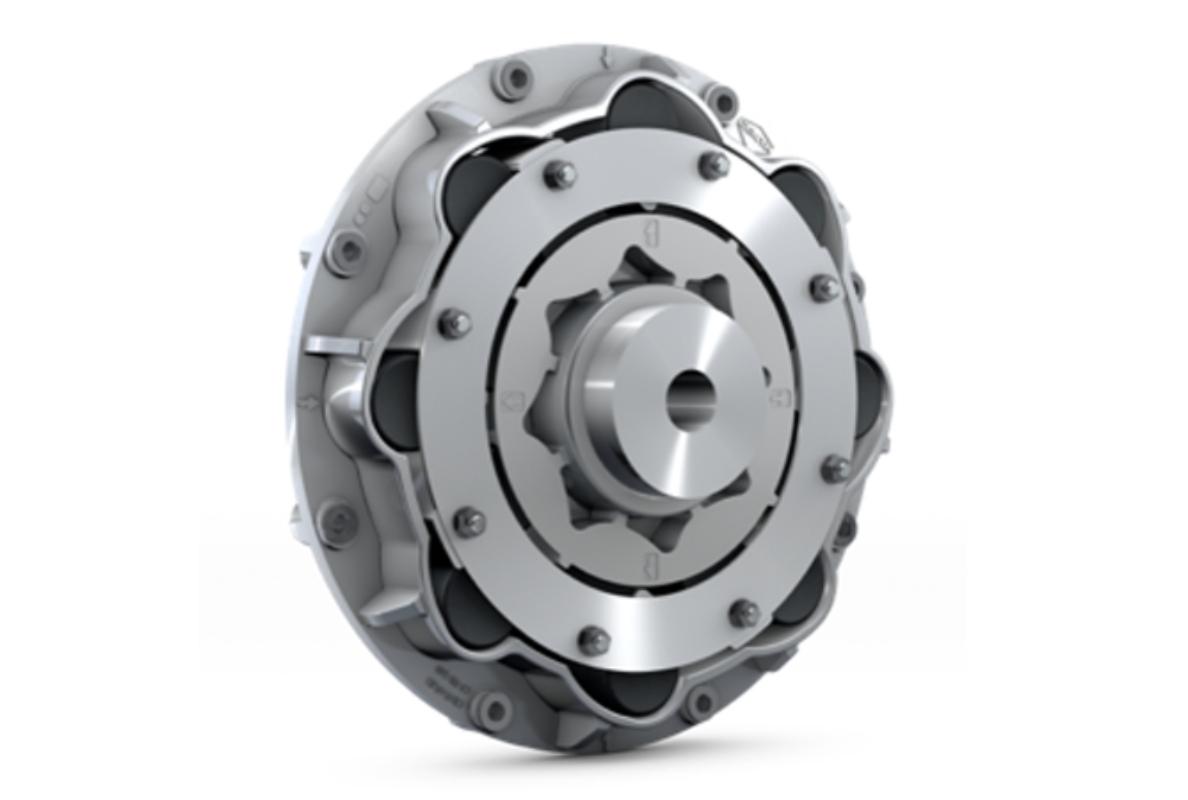
The CENTAFLEX-TIR coupling features a patented dual-stage roller design that absorbs more vibration and withstands lower RPMs than traditional couplings.
-
Tadano and MTU collaborated to redesign crane drivetrains with Stage V engines running at reduced idle speeds, which increased torsional vibrations.
-
Installation of the CENTAFLEX-TIR coupling in a lattice boom crawler crane reduced idle speed from 750 to 650 RPM, lowering diesel consumption by 0.7 liters per hour and cutting CO2 emissions.
-
The coupling enables OEMs across various industries to downsize gearboxes, reduce system vibration, extend equipment life, and achieve fuel and cost savings.
Innovative CENTAFLEX™-TIR coupling withstands lower RPM
Hightlights
-
Lower fuel consumption and reduce CO2 emissions
-
Downsize system components
-
Reduce system vibration and extend the life of connected equipment
Problem
In a bid to address the growing demand for reduced engine vibrations in the crane market, OEMs are building leaner, more efficient engines that run at lower idling speeds and produce fewer CO2 emissions. Tadano™, a crane manufacturer in Germany, worked with engine manufacturer MTU to redesign its drivetrain using lower-emissions Stage V engines.
In doing so, Tadano faced an increasingly stressful pain point: as “greener” diesel engines reduce idle speeds to as low as 600 RPM, torsional vibration increases. This cause-andeffect puts significant strain on the coupling, which is in place to protect critical drive components – i.e., gearboxes, bearings, pump drives – from accelerated wear and tear. While Stage V engines generally see idle speeds around 600 RPM, most couplings cannot withstand speeds lower than 750 RPM.
Solution
The new CENTAFLEX-TIR coupling has a patented dual-stage roller design. This allows the coupling to absorb even more vibration without overheating, thereby increasing its allowable power loss and improving the lifespan of system components.
After installing the CENTAFLEX-TIR torsionally soft coupling in a large lattice boom crawler crane, TVA analysis showed the coupling significantly reduced system vibration, reducing idling speeds from 750 to 650 RPM. This led to an average decrease in diesel consumption of .7 liters (.18 gallons) per hour. With two engines on their crane, it is estimated that Tadano will save up to 1,092 liters (288 gallons) of diesel per year, which equates to an annual savings of up to 1,750 euros ($1,900). Finally, it is estimated that the Tadano crane utilizing the CENTAFLEX-TIR coupling will see a reduction in CO2 emissions at a rate of 2.89 kg (6.37 lbs) per year.
With its patented technology and proven effectiveness, the CENTAFLEX-TIR coupling is poised to become the go-to solution for OEMs seeking to optimize fuel efficiency, reduce CO2 emissions, and extend the lifespan of their systems. By implementing the CENTAFLEX-TIR, OEMs in agriculture, construction, marine, and genset industries can select smaller gearboxes, resulting in cost savings at the system level.
Source: Regal Rexnord
Set LECTURA Press as your preferred source