

23 September 2026, 12:04
-
WEDA's Opti.Group is an RFID-based system that monitors individual sows' feeding behavior in group farrowing pens without mechanical barriers.
-
It integrates with existing farm infrastructure, using RFID ear tags and control systems to track feeding frequency and duration per sow.
-
The system detects early signs of illness by flagging deviations in feeding patterns, enabling timely intervention before visible symptoms appear.
-
Benefits include enhanced animal welfare through stress-free group housing, cost-effective installation, and focused management on sows showing abnormal behavior.

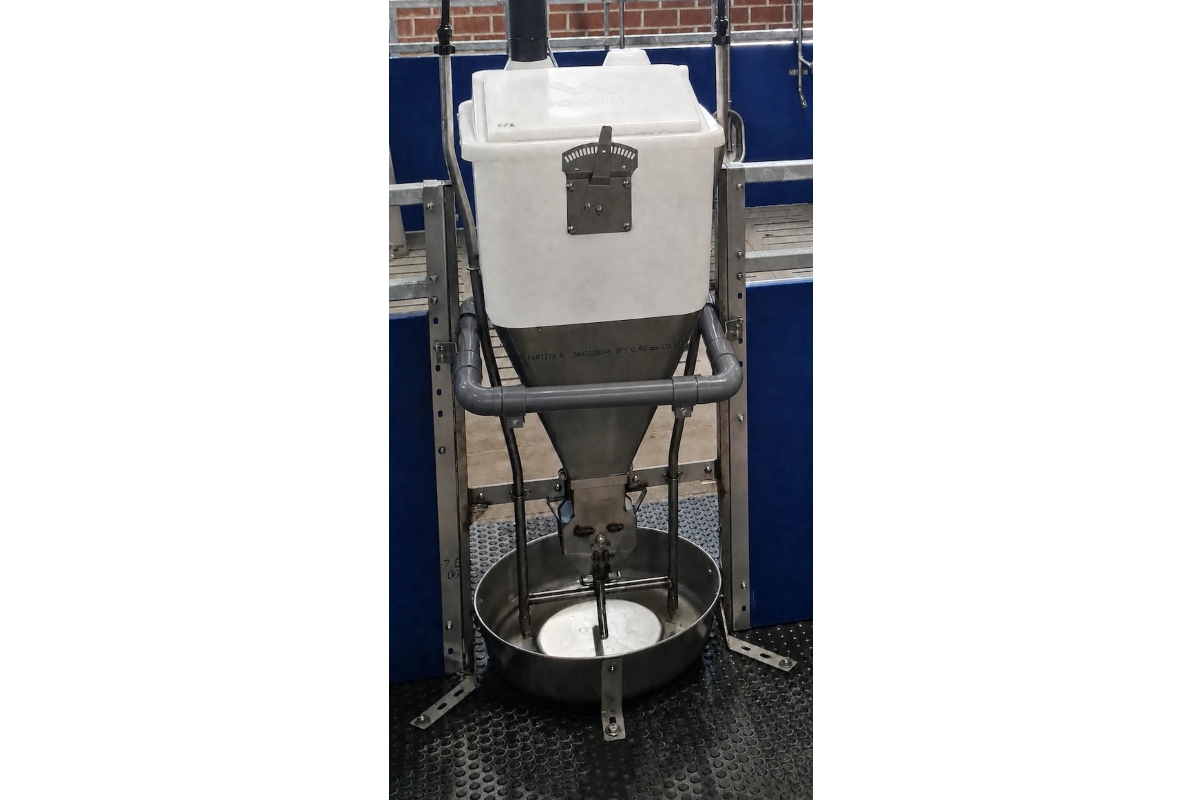
WEDA’s EuroTier innovation, Opti.Group, is an intelligent, RFID-based monitoring system for group farrowing. It completely eliminates the serious drawback of uncontrolled ad libitum feeding in group farrowing pens. Furthermore, this innovation utilises the infrastructure al-ready in place on the farm, such as the computer control system and RFID ear tags from the Opti.Station, making group housing of lactating sows safe and manageable.
Seamless individual animal monitoring
Group feeding offers enormous animal welfare benefits, such as natural social behaviour and fewer rank-related fights after weaning, whilst also reducing housing costs by eliminating the need for partition grids. In practice, however, this method has often failed because sick, injured or low-ranking sows were not identified at the communal trough. Existing individual animal feeding stations in the suckling area are extremely expensive for group pens and restrict the piglets’ freedom of movement. WEDA’s new Opti.Group solution resolves this conflict and enables comprehensive individual animal monitoring at the cost-effective group feeder – entirely without mechanical barriers.
Clear overview
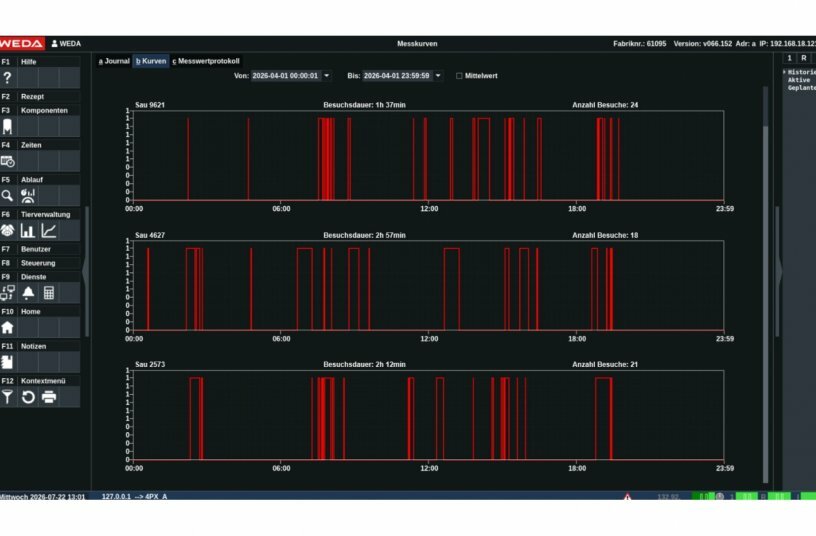
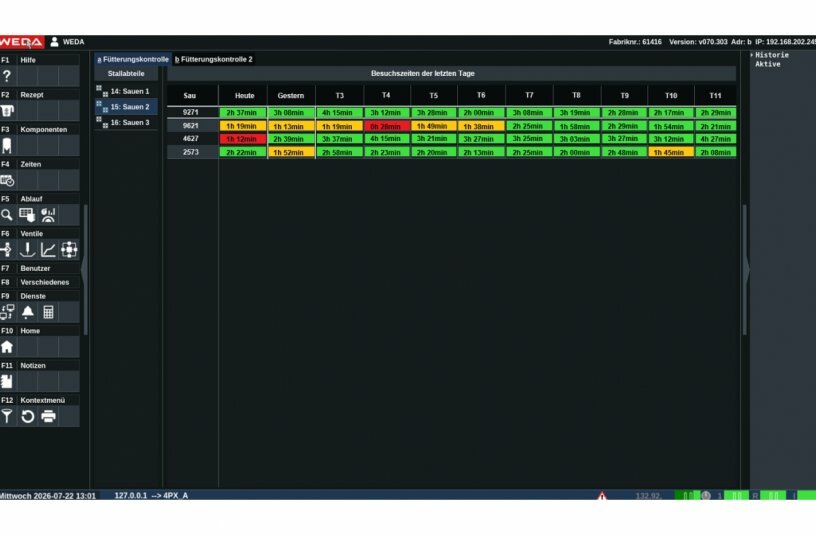
Opti.Group is an intelligent, sensor-based monitoring system for group feeding. A robust RFID antenna is integrated directly into the communal feeder in the group feeding pen. As soon as a sow moves her head into the feeder to eat, her ear tag is detected. The software continuously records, on an individual animal basis, the feeding frequency and the duration each sow spends at the feeder, even when sows and piglets are feeding from the same trough at the same time. If a sow’s feeding behaviour deviates significantly from her usual pattern, the animal is flagged as ‘suspicious’ in the system. Via a clear display on the computer, the operator can directly identify the affected sows and monitor them specifically.
Key features and benefits at a glance
-
Earliest possible detection of illness: A drop in feed intake is the first sign of MMA, fever or hoof problems. Thanks to continuous monitoring, the farmer can take action even before the sow shows visible signs of decline or milk production for the piglets drops.
-
Stress-free group housing: Sows retain maximum freedom of movement. At the same time, piglets learn stable social behaviour as early as the suckling phase, which drastically minimises the typical weaning fights.
-
Maximum return on investment: If the control computer and RFID ear tags from the waiting pen are already in place, only the antenna units on the feeders need to be retrofitted.
-
Improved physical condition and milk yield in sows result from the combination of species-appropriate exercise and sensor-based monitoring.
-
Management by exception: The feeding monitoring system reliably flags only those animals exhibiting behavioural abnormalities.
Source: WEDA
Set LECTURA Press as your preferred source

