

18 March 2025, 09:30
-
AI is being leveraged to optimize supply chains and alleviate the skilled labor shortage in the manufacturing industry.
-
A survey by the Ifo Economic Research Institute reveals only 13.3% of German companies use AI, with higher adoption in the industrial sector.
-
Cologne-based plastics company igus is utilizing AI to enhance sustainability, offering products like plain bearings made from 94% renewable materials.
-
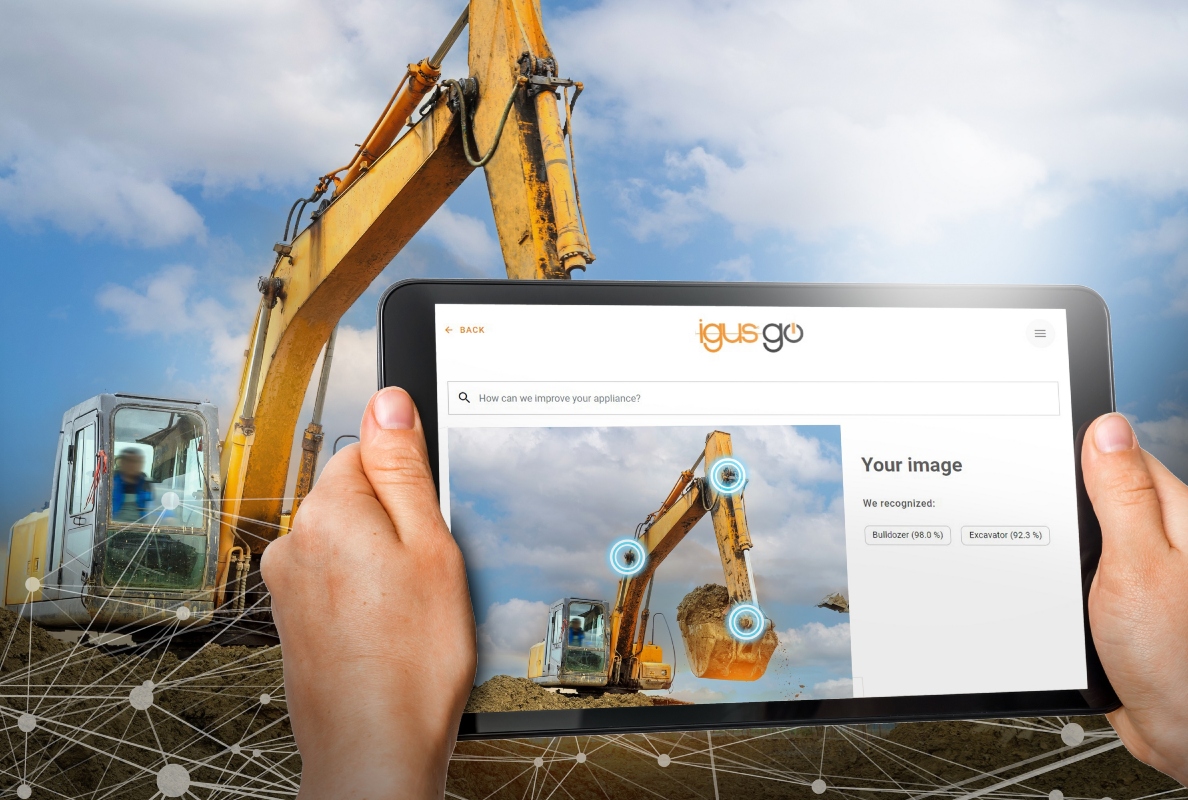
igus introduced the igusGO app at Hannover Messe 2023, which uses AI to help engineers find sustainable components quickly and efficiently.
-
igus has developed the iguverse, a VR platform for collaborative engineering projects, reducing the need for CO2-intensive travel.
-
igus continues to invest in digitalization and AI technologies to address sustainability and labor challenges in the industry.
The pressure on the manufacturing industry is growing: governments and customers expect products with a better environmental footprint. At the same time, the shortage of skilled labour is getting worse. Artificial intelligence (AI) can bring relief into this area of tension. For example, AI can be used to optimise and check supply chains, relieve employees of routine tasks and thus alleviate the shortage of skilled workers. However, according to a survey by the Ifo economic research institute, only 13.3 per cent of German companies have made use of AI to date, with major differences depending on the sector. The new technology is particularly widespread in industry. Around one in three industrial companies uses or plans to use AI. Cologne-based plastics company igus has also recognised its potential.
Advertisement
Chatbots such as ChatGPT use AI at an unprecedented level. Job losses are threatening to be within reach in several industries. In the STEM sector, however, the situation seems to be exactly the opposite. The German Economic Institute warns that there is currently a shortage of almost 308,000 skilled workers in Germany alone. The Association of German Engineers presents similarly drastic figures: at the end of 2022, there were 170,300 vacancies just for engineers - 21.6 per cent more than in the same period last year. These vacancies were offset by just over 36,000 jobseekers with engineering qualifications. The imbalance threatens to worsen when the baby boomer generation retires in the next few years. And even more so if the number of first-year students in STEM subjects continues to decrease. The situation seems precarious.
A lot of development engineers are already feeling the pressure today. Not only because few people have to deal with a lot of work, but also because the environmental requirements for new and further developments of machines, systems and vehicles are becoming more and more demanding. The EU Climate Change Package "Fit for 55", for instance, calls for a more economical use of energy and resources as it aims to reduce net greenhouse gas emissions by at least 55 per cent by 2030. Suppliers are responding to this trend. One example is the plastics specialist igus from Cologne who offer plain bearings for industry that are made from 94 per cent renewable raw materials. They also equip products such as plain bearings and energy chains with smart sensors. The advantage in terms of sustainability: a dashboard shows users how far a product's wear and tear has progressed. This allows them to make use of products' complete service life - not a matter of course. Parts are often replaced for safety reasons or too early due to fixed maintenance intervals. Procedures like these worsen the ecological balance of the product, such as a packaging machine in the food industry, which often has hundreds of bearings.
igusGO app brings customers and sustainable products together
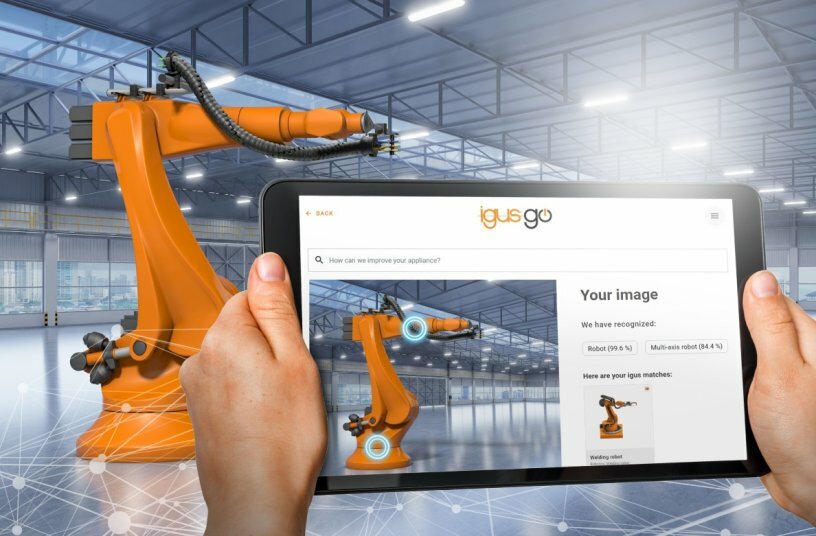
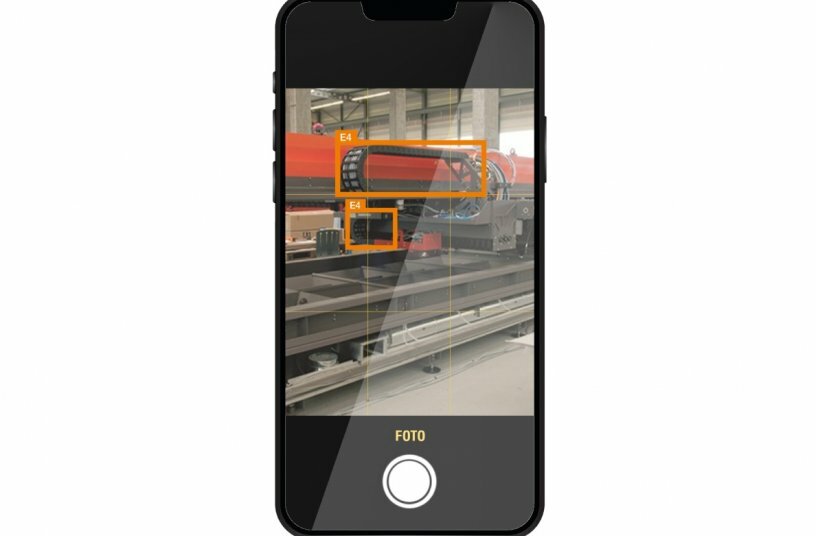
The range of sustainable components for machines and systems is growing. The question remains: How are engineers, who are already under time pressure, supposed to become aware of the new components? After all, machines and systems easily consist of many thousands of components. Here too, igus responds with digitalisation. More precisely, with artificial intelligence (AI). At Hannover Messe 2023, the Cologne-based company presented a new cloud-based app called igusGO. Thanks to AI, it only takes a few seconds to show how users can simply improve their machine with igus products and even save costs in the process. Engineers no longer waste time poring over catalogues and exchanging information about their applications with sales staff by e-mail or telephone. They simply pull out their smartphone and take a photo of their application: for example, a development engineer takes a picture of the kinematics on the axis adjustment of a mowing tractor. The app identifies the application and makes suggestions as to where lubrication-free products from igus could improve the application's sustainability and cost-effectiveness.
igusGO also shows examples of comparable applications and forwards users directly to the online shop for quick ordering. "Hannover Messe 2023 proved that people are enthusiastic about our gamification approach. They had fun exploring our product world with an AI assistant," says igus CEO Frank Blase. The Rhinelanders had simply placed an excavator on the trade show stand, which hundreds of people photographed with the app. "We will therefore continue to press ahead with the development of the app," says Kai Finke, Senior Manager Online Tools and Platform at igus. Thanks to continuous machine learning, igusGO's AI will be able to identify more and more objects in the future - far more than the 450+ use cases to date. For the next stage of igusGO, we are also developing an AI-supported chatbot that will further accelerate product selection." AI is now also being used to identify spare parts. If owners of energy chains take a photo of a defective component, such as a broken chain link, they can order a suitable replacement directly from the online shop.
Digital networking of test laboratory and online tools
Artificial intelligence is another stage in a digitalisation journey that igus embarked on many years ago. Engineers can now use over 40 online tools to configure products such as energy chains according to their own ideas - without having to exchange information with sales staff beforehand. "The tools not only save valuable working time. They are also directly connected to the in-house test laboratory. Data from billions of test cycles are available, which users can even use to calculate the service life of products with just a few clicks. A plus for sustainability, as there are fewer exchanges," explains Finke. The service life statement for cables in the chainflex range, for example, is now so reliable that the company can offer a guarantee of four years, which is unique in the industry. Other manufacturers are usually reluctant to make binding service life statements. Finke: "Here too, digitalisation proves once again how it can significantly strengthen functional reliability and sustainability."

Engineering in virtual reality - without CO2-intensive travelling
To further strengthen the sustainability of engineering, igus has gone one step further and developed its own metaverse: the iguverse. Virtual reality (VR) allows machines, systems and vehicles to be recreated from reality as digital 3D twins. With VR goggles, trade show visitors immersed themselves in the digital parallel universe, climbing into a minivan or onto a sky-high drilling rig as avatars, just like in a computer game. They experienced first-hand where and how energy chains, plain bearings and other igus products are used. An impressive adventure that will help sales staff explain complex products clearly in future. However, presenting alone is not enough.
The vision of igus is to develop the iguverse into an open B2B platform. People from all over the world can work together in digital space and carry out entire engineering projects using 3D models. Without CO2 and time-consuming travelling. It could even be possible to design an entire shop floor together with suppliers and then transfer it to the real world using augmented reality (AR). If development engineers then look at a factory hall through the camera of a tablet or smartphone, they can superimpose the image with 3D models from the iguverse and thus gain an early impression of whether the real environment can be harmonised with the planned machines and systems. Thanks to VR, projects become more vivid and tangible from day one. The first customers are already using the iguverse and benefiting from the advantages of VR. "igusGO, online tools and iguverse: we are convinced that digitalisation with trend technologies such as AR and machine learning will help companies deal with the pressure of increasing sustainability requirements and the shortage of skilled workers," concludes Frank Blase. "We will therefore continue to invest a lot of capacity in research and development in future."
Source: igus GmbH
Set LECTURA Press as your preferred source

