

19 March 2025, 10:15
-
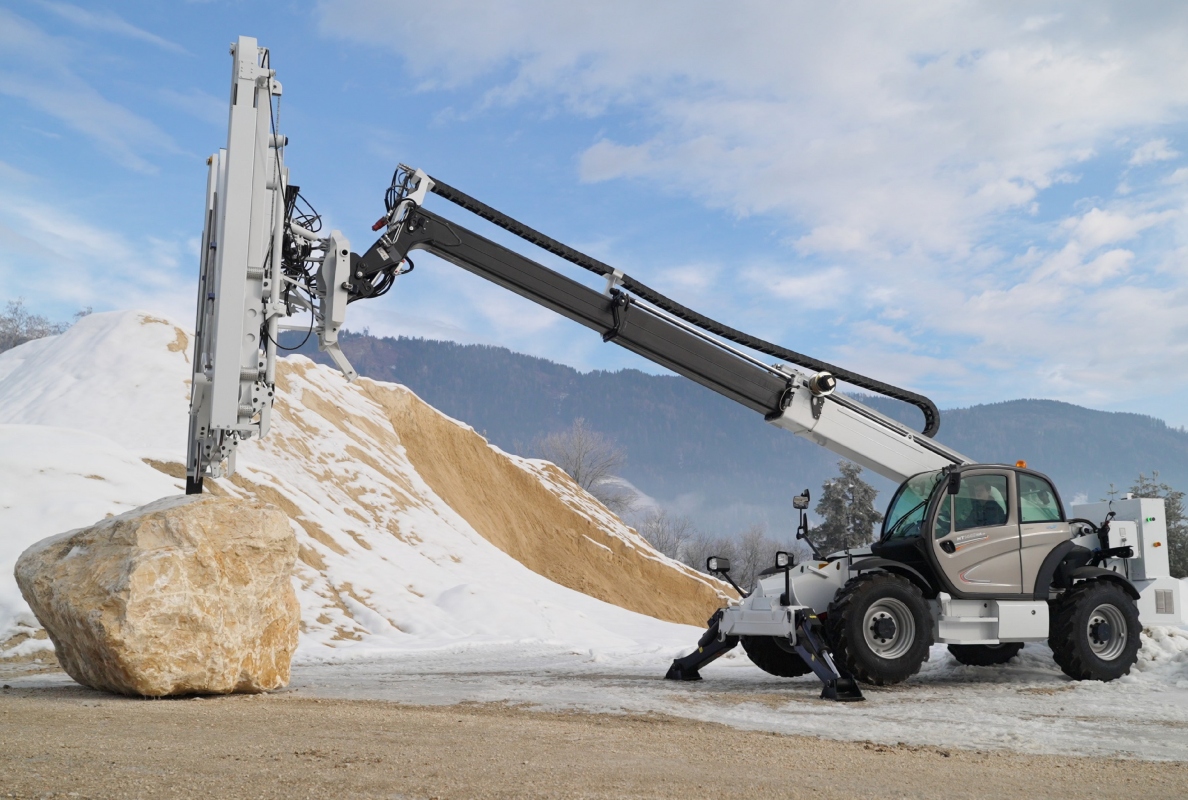
Schwing GmbH introduces the MDS 5034 mobile diamond wire saw for efficient on-site cutting of natural stone.
-
The MDS 5034 utilizes lubrication-free igus plain bearings and energy chains for reliability in harsh quarry environments.
-
The saw mounted on a Manitou telescopic handler, can cut stone blocks up to five meters wide and 3.4 meters deep.
-
Schwing's venture into natural stone processing is led by Markus Hatzer, who developed the saw after a long career in the industry.
-
The igus iglidur Q2 plain bearings used in the MDS 5034 are self-lubricating, maintenance-free, and suitable for dusty environments.
-
Schwing and igus aim to create a sustainable, cost-saving option for on-site stone cutting, reducing material consumption and CO2 emissions.
Lubrication-free igus plain bearings allow for low-maintenance cutting of natural stone with the Schwing MDS 5034
Advertisement
Harsh environments in quarries require reliable, low-maintenance, easy-to-use tools that can withstand dust, heat and great forces. Schwing GmbH, based in St. Stefan in Austria's Lavant Valley, has created the MDS 5034 mobile diamond wire saw, a solution that greatly facilitates on-site cutting of natural-stone blocks that weigh tons. Plain bearings and energy chains made of igus high-performance polymers ensure its reliability.
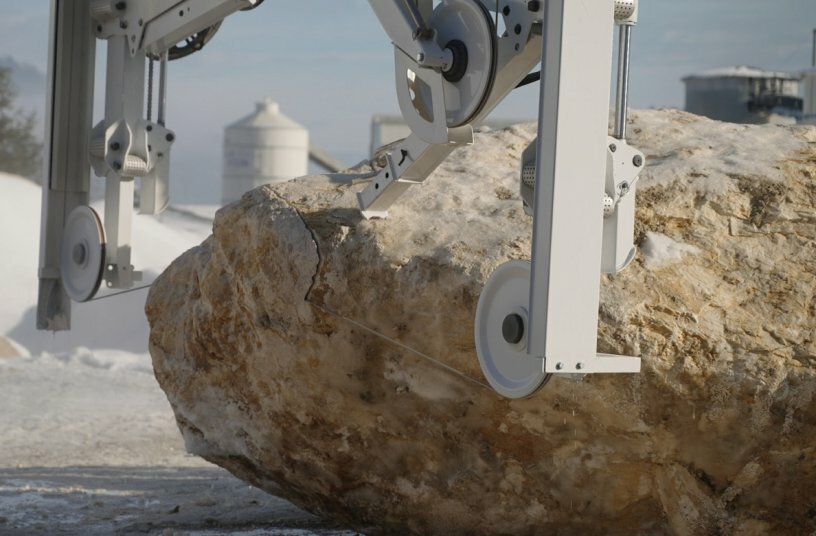
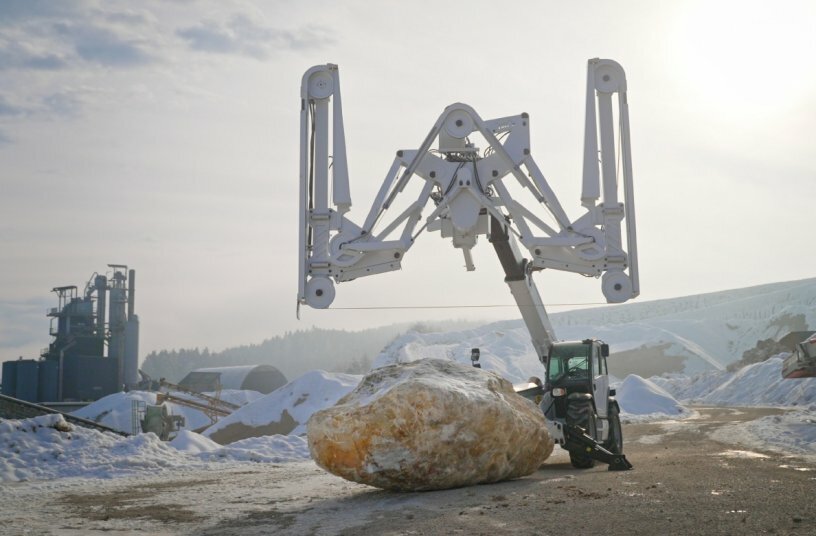
Dust swirls up from the ground as large work vehicles make their way through the quarry. On-site temperatures top 30°C. Explosives are placed with great effort in many holes in the rock face, after which a blast echoes throughout the area. A boulder weighing several hundred tons falls, coming to rest a few metres away from the face. This is where the Schwing GmbH MDS 5034 mobile diamond wire saw comes into play. The saw - mounted on a Manitou telescopic handler - moves to the spot and is adjusted remotely to the desired cut. Its position can be set individually with a pivoting range of 66°. A water jet binds dust and dirt particles, then the diamond wire starts moving at speeds of 20 to 40 metres per second. It is an impressive sight: the MDS can cut stone blocks up to five metres wide to a maximum depth of 3.4 metres. Depending on the rock type, it can cut at a speed of ten centimetres per minute. When the job is done, the saw is folded up again into a compact form and placed on a regular low-loader. The vehicle, the transport width of which amounts to less than three metres, can be taken to the quarry without special approval. If the saw is to survive all this without damage, it must be robust. In the quarry, forces of two to two and a half times that of gravity act on the machine. There is also a lot of dirt, but due to the lack of water in the quarry, it is difficult to constantly clean the saw. For this reason, Schwing decided to install plain bearings and energy chains from igus, the motion plastics specialist. The components are made of high-performance plastics that are tribologically optimised (that is, optimised for friction and wear) and suitable for use with great loads.
Opening up new business areas
The MDS was a venture into new territory for Schwing, whose core competence is manufacturing concrete pumps. Markus Hatzer can take the credit for the saw's addition to the company's product range. He currently works as Innovation Assistant and Application Engineer and had a similar mobile saw in mind as early as 2006 after a long career in the natural-stone industry. He registered the first patents in 2012. "I started building a prototype and planned a machine that was much too large," Hatzer reminisces. He installed 20 rollers; today, there are only seven. Hatzer later presented his prototype to Schwing and received a warm welcome. The research and development department in St. Stefan took on the project and developed the MDF 5034 together with Hatzer. Today, ten people are working on the project. The saw is Schwing's venture into new business areas related to natural-stone processing.
Engineering for more sustainable natural-stone processing
Markus Hatzer is aware of the demands placed on quarry machinery. He knows that blasting and processing entail a great deal of effort. Normally, natural stone is extracted in several steps: the rock is blasted with enormous forces and broken up into smaller parts by further blasting. Heavy blocks of stone are then driven several hundred kilometres to a plant where they are cut and processed. The problem: if cracks and colour deviations in a stone block are not discovered before this point, all effort was in vain. Moreover, up to 20 centimetres of material are lost with each blast. Many things can cause material to be faulty: inclusions often remain unnoticed until the stone is cut in the workshop. And the tool itself also poses a hazard. Lubricants such as those found in bearings in construction machinery can drip onto the stone and soak into the material, rendering it unusable. Lubrication-free components reduce rejects and unnecessary transport trips. Schwing recognised this, so they used the cylindrical igus iglidur Q2 plain bearings in the MDS 5034's joints. These bearings were developed specifically for heavy-duty pivoting applications and are especially resistant to edge pressure, shock and impact.
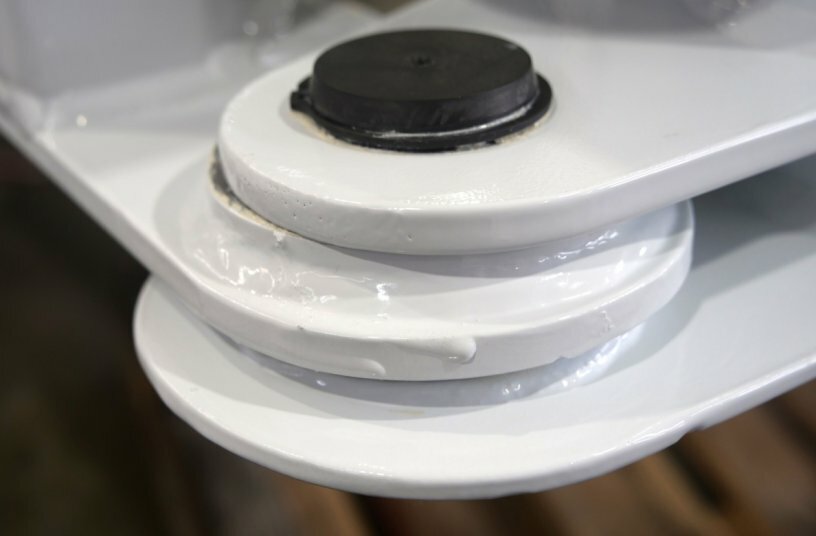
Plastic impresses with its dampening properties
igus has been working with Schwing since the beginning of the MDS's development. At first, however, it was not at all clear that a central part of the MDS (the Q2 bushings) would come from igus. "We had reservations about plastic, since our application involves heavy loads," says Daniel Kriegl, Development Engineer at Schwing. He had previously trusted only brass bushings. The decisive factor for Kriegl was the reference of an Austrian excavator manufacturer, who also used igus bushings. Fabian Legner, Technical Sales Consultant at igus, shared the use case with Schwing and was able to convince Kriegl that plastic plain bearings would work. "We ultimately never compared it with brass. The plastic plain bearings' dampening properties make them suitable for the MDS," says Kriegl. Unlike other construction machines, the saw is subject to a limited impact load, since the MDS is extended and retracted only a few times.
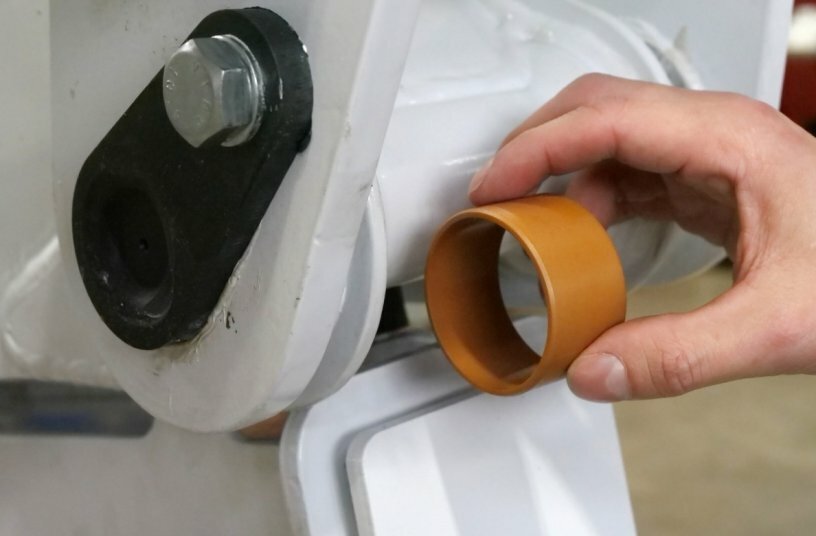
No lubrication or maintenance required
The most important feature for Schwing is the lubricating properties. Like all igus plain bearings, iglidur Q2 bushings are self-lubricating and dry-operating, eliminating the risk that the stone will be contaminated by dripping lubricant. The bearings are also suitable for use in dusty and dirty environments, such as quarries. Maintenance-friendly properties were especially important to Schwing during MDS development. Lack of water in the quarry means that constant cleaning is not always possible. "If dirt gets into the plastic bearings, it's not as bad as with brass. Plastic is more forgiving," says Kriegl. Currently, 40 bushings of different sizes are installed in each machine, and 100 more bearing points could be added in future for heavy-duty rollers.
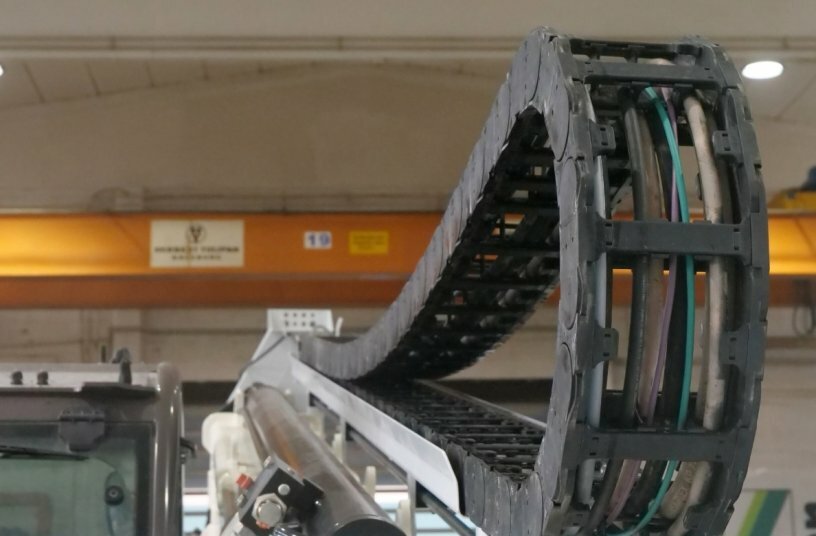
Reliable cable guidance with igus energy chains
In addition to the Q2 bushings, Schwing uses igus energy chains in the MDS 5034 to ensure safe cable movement when the saw is extended and aligned. Schwing looked at a large selection of competing products, but quickly chose igus. "Given our experience with the bushings, there was no reason to go with another manufacturer," says Kriegl. H4.56-series energy chains were used in the first machines, but Schwing switched to H4Q.58 chains with their inner height of 58 millimetres for later models. The igus components make the saw robust and reliable in daily quarry work. Schwing and igus are thus creating a sustainable, cost-saving option for cutting stone directly on site and thereby greatly reducing material consumption, time and CO2 emissions in the manufacturing process. Daniel Kriegl summarises his feedback regarding the cooperation as follows: "The support is great, and the igus products really are a perfect match for our application."
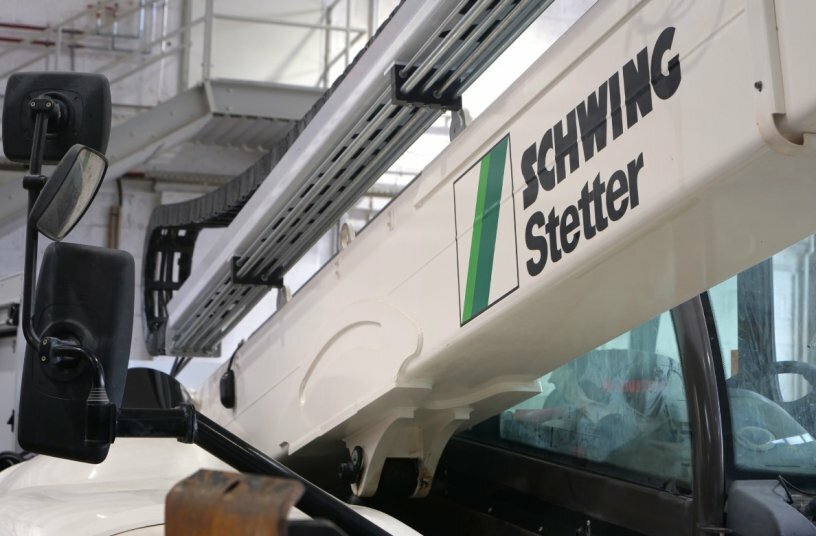
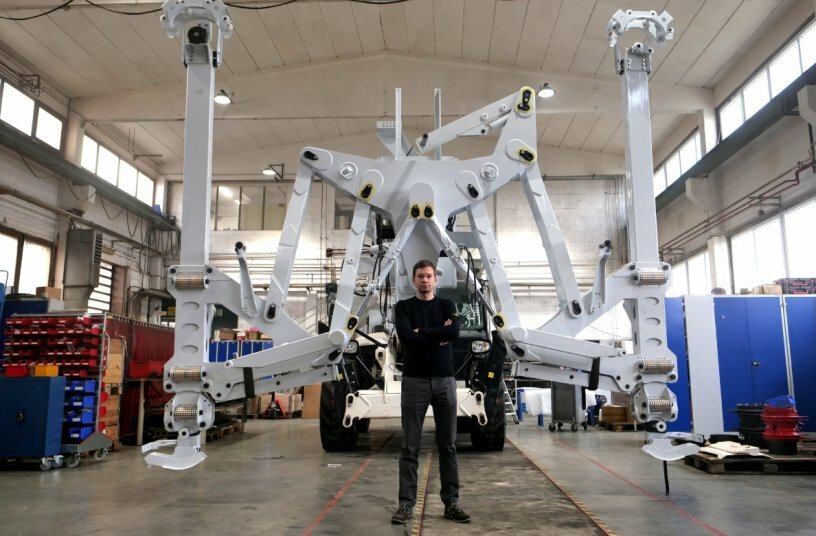
Source: igus GmbH
Set LECTURA Press as your preferred source

