

20 August 2024, 16:39
KSI mixing attachments simplify the proven MMI process
Advertisement
At InnoTrans 2024 in Berlin, the manufacturer KEMROC will be focusing on its KEMSOLID business segment. At the centre of the display there will be a KSI mixing attachment, developed to simplify the well-known MMI in-situ mixing process for soil permeability and soil stabilisation, making it more cost-effective and flexible. This process can be used to upgrade traffic routes to cope with higher traffic loads and speeds – such as rapid transit installations and motorways.
KEMROC is a market and technology leader in the development and manufacture of special milling attachments for excavators and backhoe loaders for many applications. At the InnoTrans 2024 trade fair taking place in Berlin from 24 to 27 September 2024, KEMROC will focus on its KEMSOLID division. Under the banner "KSI – KEMSOLID Soil Injection", the company markets a mixing attachment for soil stabilisation and installation of foundations in infrastructure projects, including road and rail building as well as the production or renewal of internal impermeable barriers for dams. In this process, the blade of the KSI mixing attachment, mounted on a standard crawler excavator, penetrates the soil. A chain running along the length of the blade mixes the soil with a binder suspension pumped to the blade through hoses from a mixing plant and the whole process is called the milling-mixing-injection (MMI) method. After hardening this creates a homogeneous, stable, load-bearing and dense soil / concrete structure in the soil. This process is very sustainable as it mixes the soil with a binder in-situ. This eliminates costly transportation of large quantities of materials and concrete, as well as the removal and disposal of excavated material.
The MMI process is already being used with large and heavy purpose-built carriers. The core elements of the method developed by KEMSOLID are the KSI mixing attachments from the manufacturer KEMROC. Depending on the blade length, they are suitable for use on carriers with operating weights from 35 to 200 tons. Mounted on standard excavators, they offer a lighter and more flexible alternative, with lower capital costs and lower transport costs to and from site. Construction companies without their own dedicated MMI machine can now carry out this work using a KSI mixing attachment on their own standard excavator.
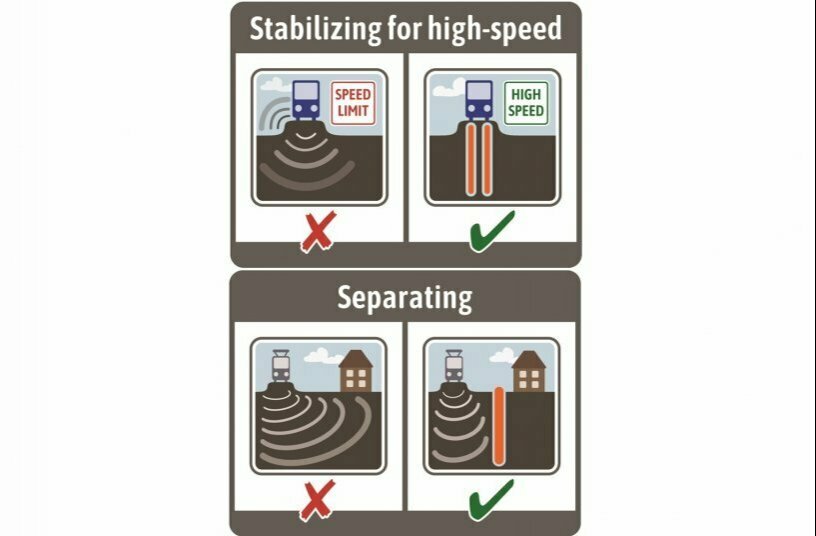
The MMI process with KSI mixing attachments is used for many applications such as soil stabilisation and permeability issues. For example, it is used where new traffic routes are being built on low-load soils or where ground conditions must be improved to handle higher traffic loads and speeds. These include rapid transit routes and motorways. This method is particularly useful in the railway sector where it is used to strengthen old railway embankments for higher speeds and to produce barriers for noise and vibration emissions.
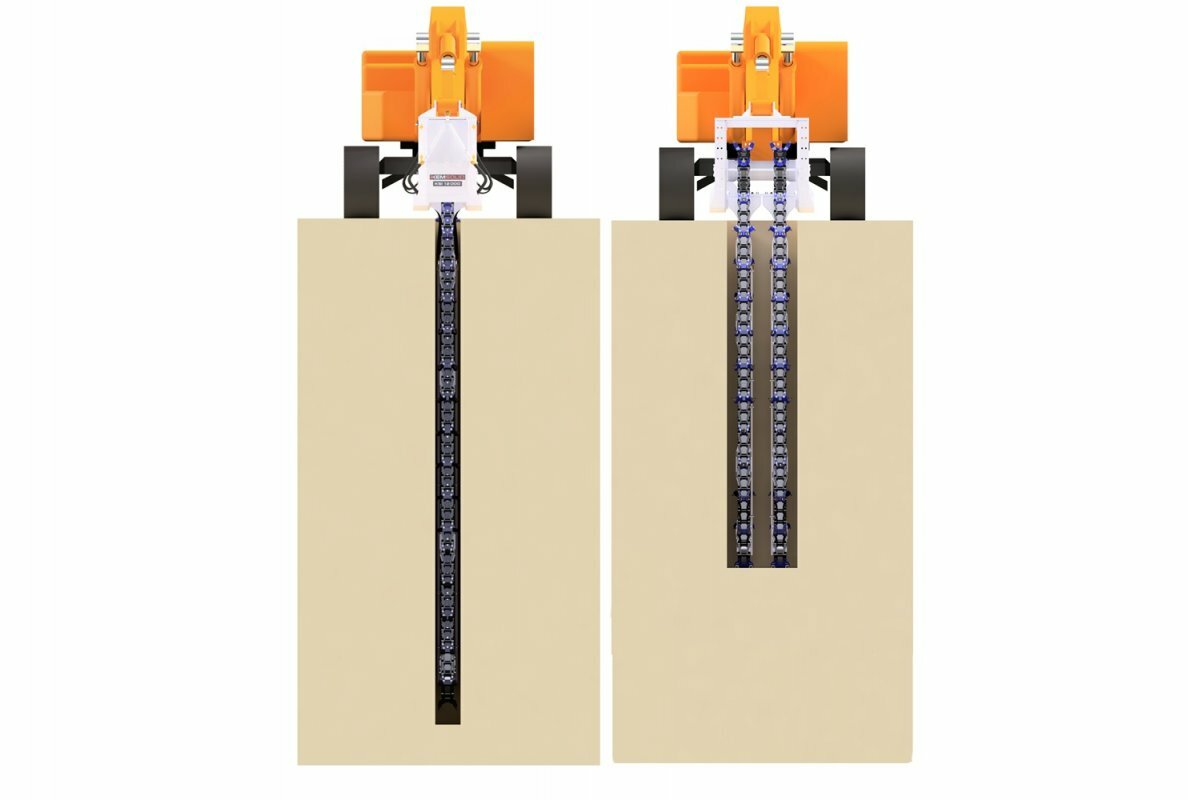
KSI mixer attachments for excavators are available in various lengths from 5 to 16 m and with cutter widths from 350 to 950 mm. KEMROC is currently developing a KSI mixing attachment with a double blade, specifically designed for use in railway construction work.
Source: KEMROC Spezialmaschinen GmbH
Set LECTURA Press as your preferred source
